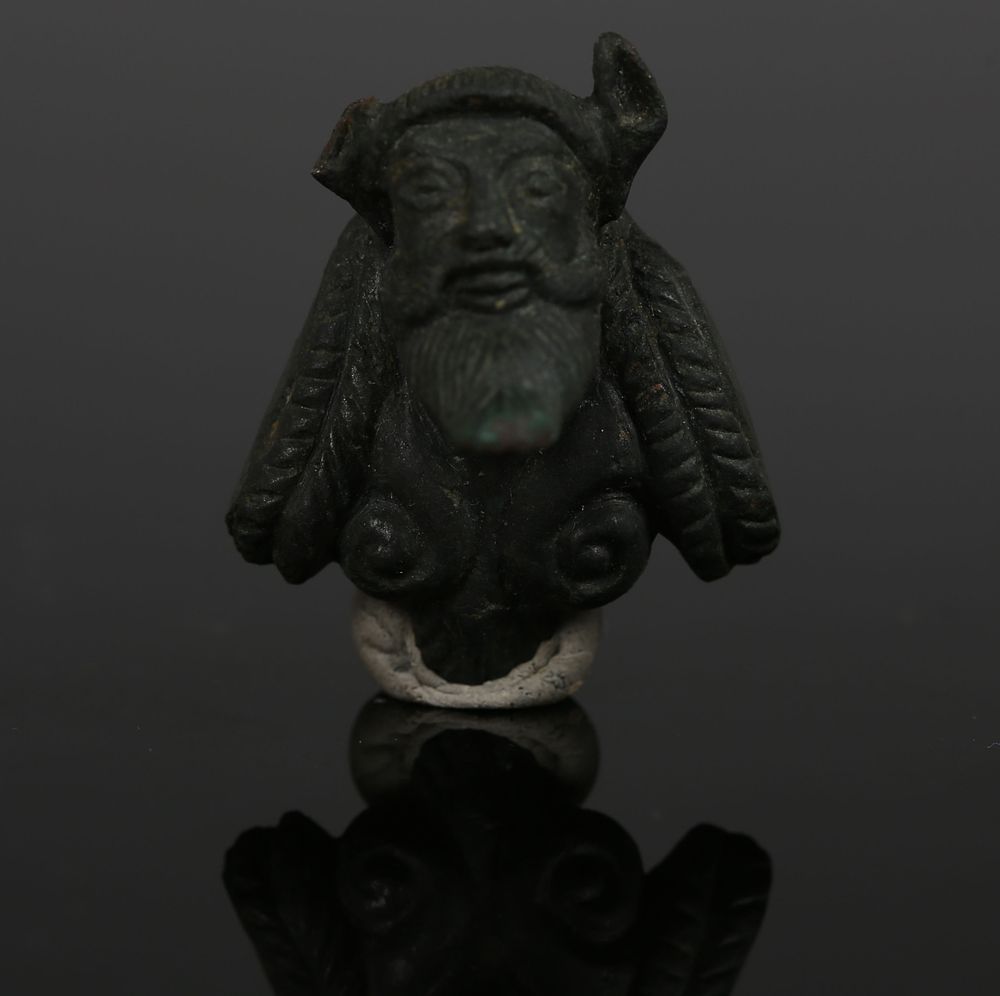
Subasta Bidspirit | Etruscan Silenus applique
Etruscan Silenus applique - ITEM: Silenus applique MATERIAL: Bronze CULTURE: Etruscan PERIOD: 4th - 2nd Century B.C DIMENSIONS: 30 mm x 25 mm CONDITION: Good condition PROVENANCE: Ex European private collection, Ex Lakythos S.A.R.L (1987), Ex Galerie Hydra, Geneva, Switzerland (1984) Comes with Certificate of Authenticity and Export Licence. If you are from outside the European Union, we will have to apply for the export licence again for your country, this takes 3 to 5 weeks and has a cost of 5% of the hammer price, this amount will be added to the final invoice. The Etruscan Silenus applique is a fascinating example of the Etruscans' adoption and adaptation of Greek mythological figures, specifically the wild companion of Dionysus (known as Bacchus to the Romans). An applique is a decorative element, usually made of bronze or terracotta, designed to be attached to another object, such as the handles of large bronze vessels (stamnoi or stamnos), bronze cistae (cylindrical containers), or furniture. In Etruscan art, Silenus—often depicted as a bald, stout, bearded man with features like horse ears and a snub nose—served primarily as a decorative mask or a small, lively, reclining figure. His imagery evoked the themes of wine, revelry, fertility, and the untamed natural world, reflecting his role as a daimon (nature spirit) and the tutor of the wine god. The artistic function of these appliqués was two-fold: decorative and apotropaic. The grotesque or exaggerated features of the Silenus mask, such as his often furrowed brow, wide eyes, and heavy beard, were believed to possess the power to ward off evil or misfortune. This protective quality, known as apotropaic function, made the Silenus head a common motif on the architecture of Etruscan temples, particularly as antefixes—decorative tiles placed at the eaves of the roof to conceal and protect the ends of the roof tiles. Terracotta antefixes featuring the head of Silenus from the 4th century BCE are particularly well-documented, often showing traces of the original vivid red, white, and black paint used by Etruscan artisans. The stylistic lineage of the Etruscan Silenus can be traced directly back to Greek prototypes, but Etruscan artists frequently infused the figure with their own regional aesthetic, often emphasizing the archaic features for greater expressiveness, especially in earlier bronze works (6th to 5th century BCE). These bronze appliqués showcase the Etruscan mastery of metalwork—often produced via the lost-wax casting process—and their role as avid consumers and producers of Dionysian imagery. Whether appearing as a full reclining figure on a vessel or merely as a dynamic mask ornament, the Silenus appliqué remains a powerful visual testament to the religious and social importance of Dionysiac cults and associated ritual feasting within Etruscan society.