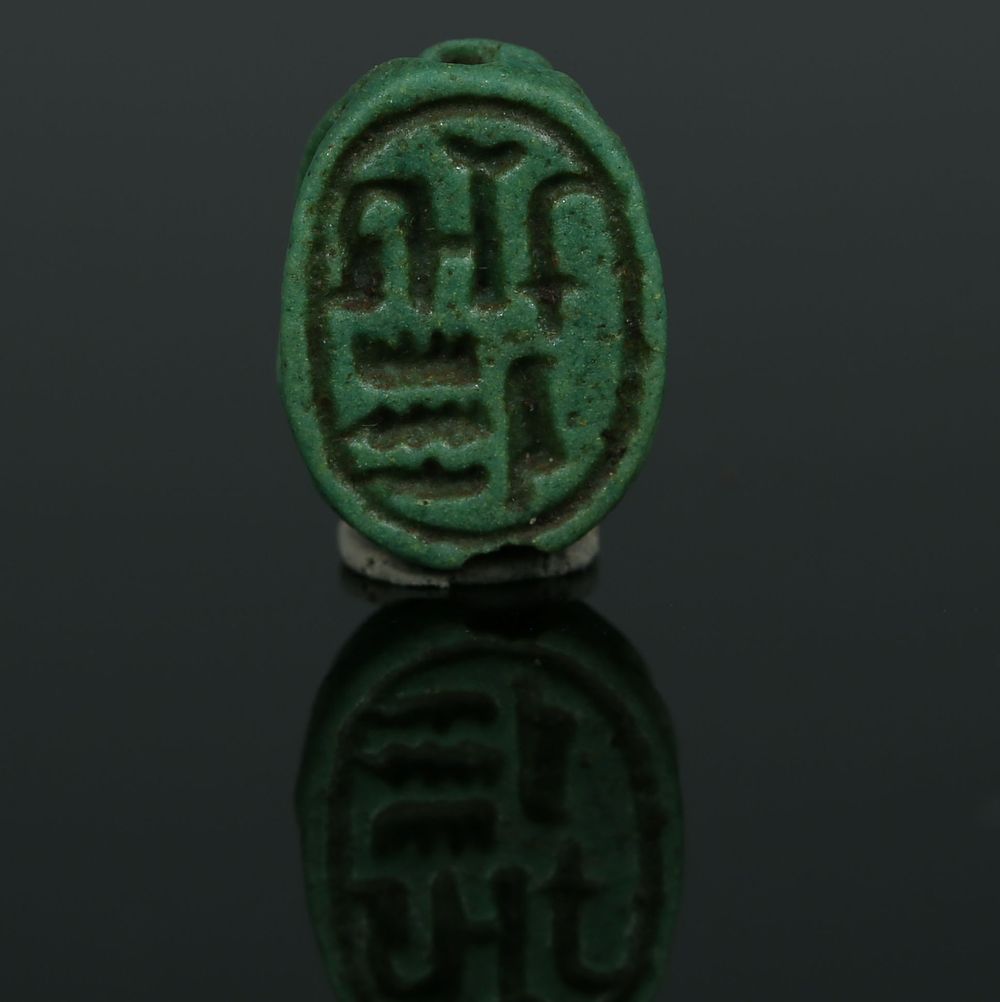
Subasta Bidspirit | Egyptian scarab of the royal
Egyptian scarab of the royal scribe Amenhotep, Ex MUSEUM - ITEM: Scarab of the royal scribe Amenhotep MATERIAL: Faience CULTURE: Egyptian PERIOD: New Kingdom, 1550 - 1292 B.C DIMENSIONS: 15 mm x 11 mm CONDITION: Good condition PROVENANCE: Ex Museum Exhibiton of the Arbeitsgruppe für Biblische Archäologie, Germany (Deaccession) Comes with Certificate of Authenticity and Export Licence. If you are from outside the European Union, we will have to apply for the export licence again for your country, this takes 3 to 5 weeks and has a cost of 5% of the hammer price, this amount will be added to the final invoice. The scarab of the royal scribe Amenhotep is a finely crafted amulet that reflects the artistic and administrative sophistication of New Kingdom Egypt, likely dating to the 18th Dynasty. Carved from steatite and glazed in a bright blue or green hue, the scarab bears the distinctive features of these popular amulets, including a rounded back incised with lines to mimic a beetle’s wings and legs. The underside is inscribed with hieroglyphs naming Amenhotep, who held the prestigious title of ”royal scribe”—a position of significant influence within the pharaonic bureaucracy, often involved in royal correspondence and state recordkeeping. The inscription is typically composed within a cartouche or framed register and may include epithets such as “beloved of Thoth, ” referencing the god of wisdom and writing. This not only identifies Amenhotep by name and title but also invokes divine legitimacy for his work. Scarabs like this one were often used as personal seals, pressed into clay or wax to mark documents and containers, and could serve funerary or amuletic purposes, ensuring protection and remembrance in the afterlife. Artifacts bearing the name of Amenhotep provide valuable insight into Egypt's administrative elite and the individuals who served closely with the pharaoh. As royal scribes were educated and literate, their legacy endures not just through monuments but through portable objects such as scarabs. These pieces offer a glimpse into the lives of powerful, though often lesser-known, figures in ancient Egyptian society—bridging the gap between the royal court and the daily operations of the empire.