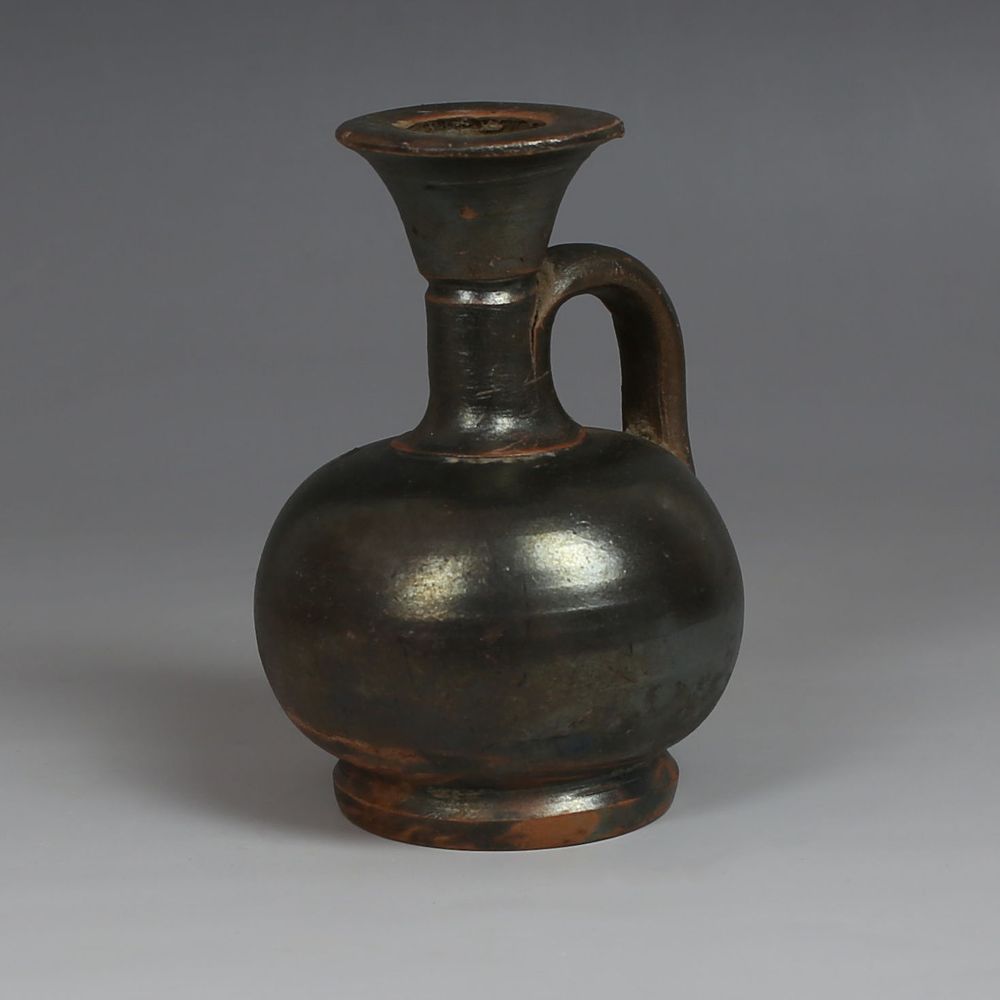
Subasta Bidspirit | Greek squat lekythos
Greek squat lekythos - ITEM: Squat lekythos MATERIAL: Pottery CULTURE: Greek PERIOD: 4th Century B.C DIMENSIONS: 85 mm x 60 mm CONDITION: Good condition PROVENANCE: Ex Dutch private collection, acquired before 2000s Comes with Certificate of Authenticity and Export Licence. If you are from outside the European Union, we will have to apply for the export licence again for your country, this takes 3 to 5 weeks and has a cost of 5% of the hammer price, this amount will be added to the final invoice. The squat lekythos is a distinct, smaller variant of the ancient Greek lekythos, an oil vessel primarily used for storing valuable oils, especially perfumed olive oil for cosmetic and ritual purposes. Unlike the standard cylindrical or 'shoulder' lekythos, which is typically tall and slender (30–50 cm), the squat lekythos is characterized by its short, globular body that quickly rounds into a flat base, topped by a narrow neck and a single handle. This compact shape generally measures less than 20 cm in height and became popular in Athens during the Classical period, particularly from the second half of the 5th century BCE onward. Its size made it convenient for personal use and handling small quantities of expensive scented oil or unguents. The vessel played a significant dual role in both daily life and funerary rites. In everyday use, the narrow neck of all lekythoi was intentionally designed to limit the flow of oil to a thin stream, or even drops, making it efficient for anointing the body after bathing or exercise in the gymnasium. However, its most enduring association is with death. Lekythoi, in general, were routinely placed in tombs as offerings to the dead, providing the deceased with oil for their journey into the afterlife. The squat lekythos specifically gained prominence in the red-figure technique, as the taller, standard lekythos increasingly shifted to the white-ground technique for funerary scenes. This small, decorative flask was a common find in graves throughout the Greek world and beyond, attesting to its widespread use and cultural importance. The decoration of a squat lekythos often reflects contemporary Athenian life, mythology, or ritual. Found predominantly in the Attic style and decorated with the red-figure technique, the surface was used to depict intricate scenes. For example, a squat lekythos might show a scene from a domestic setting, a mythological narrative like the story of Philoktetes on Lemnos, or scenes related to female deities or rituals, such as the Athenian festival of the Adonia. The high quality of some surviving examples suggests they were favored by the best vase painters of the late 5th and early 4th centuries BCE, making them valuable historical artifacts that illuminate ancient Greek daily practices and religious beliefs surrounding death and remembrance.