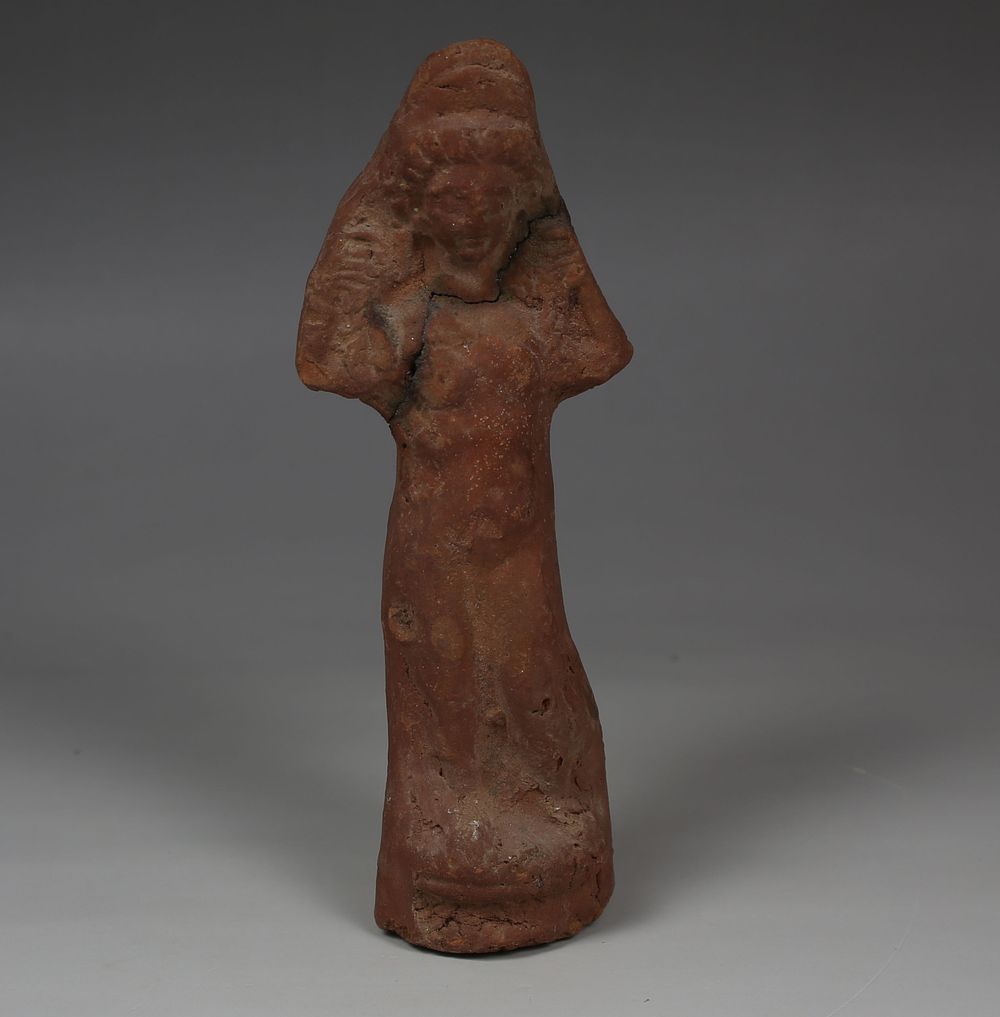
Subasta Bidspirit | Roman statuette of Venus
Roman statuette of Venus - ITEM: Statuette of Venus MATERIAL: Pottery CULTURE: Roman PERIOD: 1st - 2nd Century A.D DIMENSIONS: 136 mm x 52 mm CONDITION: Good condition, repaired PROVENANCE: Ex German private collection, M.H., acquired between 1970 - 1980 Comes with Certificate of Authenticity and Export Licence. If you are from outside the European Union, we will have to apply for the export licence again for your country, this takes 4 to 6 weeks and has a cost of 5% of the amount of the sale, this amount will be added to the final invoice. Venus was a central figure in Roman mythology and played a significant role in the religious and cultural practices of ancient Rome. As the divine embodiment of beauty and sexual allure, Venus was often depicted in the nude or partially draped, emphasizing her sensuality and femininity. Statuettes of Venus were commonly made from materials such as marble, bronze, or terracotta, and were often found in domestic settings, where they were used as symbols of love, protection, and fertility. These figures might also have been dedicated to Venus in private worship or used in rituals to invoke her favor. Roman Venus statuettes often featured the goddess in a pose that emphasized her grace and beauty. One of the most famous representations is the Venus Pudica, a modest pose where Venus is depicted covering her genitals with one hand while the other arm is extended, often holding a mirror or some other object. This stance became a standard representation of Venus and other female deities in Roman art. The soft, rounded features of these sculptures, combined with the subtle drapery or nude form, captured an idealized vision of feminine beauty that was central to Roman ideals. These statuettes, whether full-sized or small, often conveyed both divine power and personal allure, reflecting Venus's association with love, romance, and desire. The presence of Venus statuettes in Roman homes and public spaces reflects the widespread reverence for the goddess in Roman society. They were used not only as decorative items but also as talismans of protection and good fortune, particularly in matters of love, marriage, and fertility. Venus was often called upon in the private sphere, particularly by women seeking her blessings for a fruitful marriage or childbirth. In addition to their domestic use, Venus statuettes were also found in temples dedicated to the goddess, where worshippers would present offerings to her in hopes of receiving her favor.