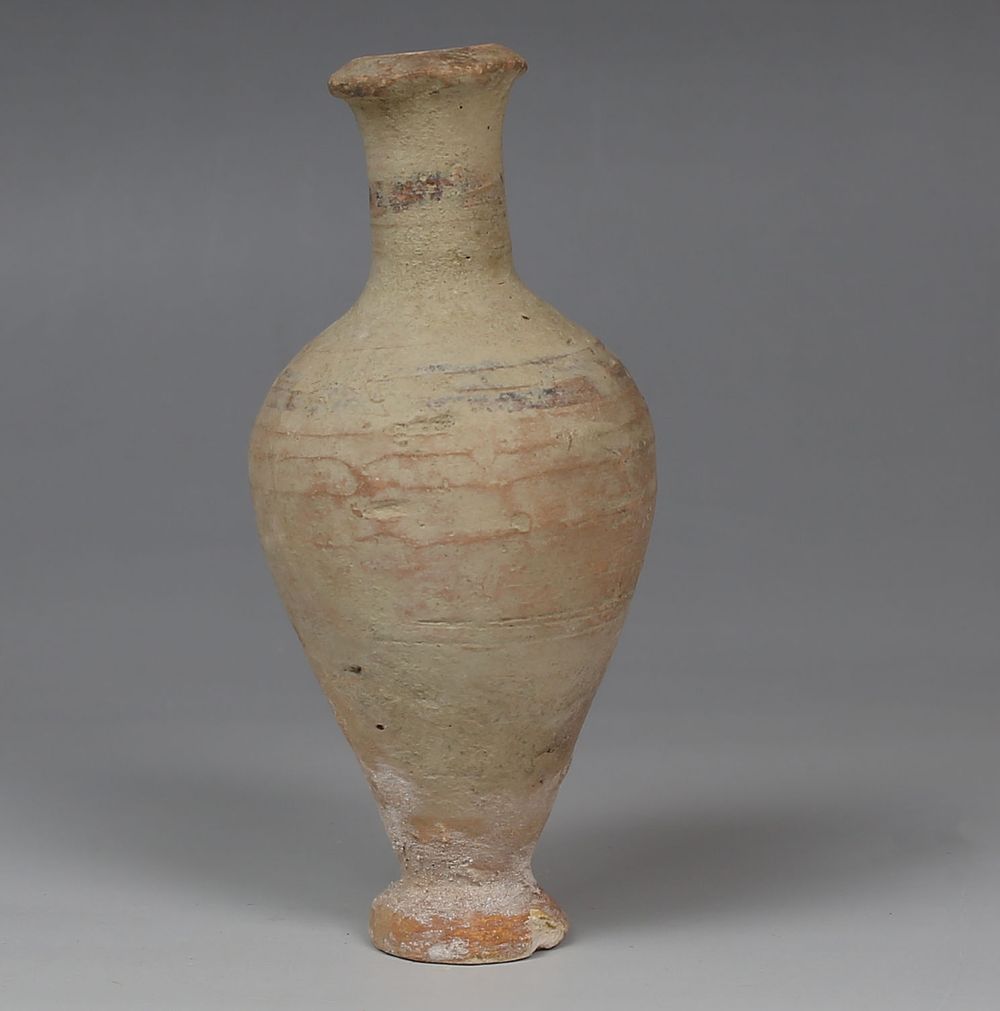
Subasta Bidspirit | Greek unguentarium
Greek unguentarium - ITEM: Unguentarium MATERIAL: Pottery CULTURE: Greek PERIOD: Hellenistic period, 3rd - 1st Century B.C DIMENSIONS: 96 mm x 43 mm CONDITION: Good condition PROVENANCE: Ex German private collection, acquired between 1970 - 1990 Comes with Certificate of Authenticity and Export Licence. If you are from outside the European Union, we will have to apply for the export licence again for your country, this takes 3 to 5 weeks and has a cost of 5% of the hammer price, this amount will be added to the final invoice. A Greek unguentarium was a small, slender bottle used for storing and dispensing perfumed oils, ointments, and other precious liquids. These vessels were an essential part of daily life in ancient Greece, particularly in the context of personal grooming, religious rituals, and social ceremonies. The word unguentarium comes from the Latin word unguentum, meaning ”ointment” or ”perfume, ” highlighting the vessel's primary function. Typically made of glass, pottery, or occasionally metal, Greek unguentaria were crafted in various sizes and shapes, often with narrow necks and small openings to facilitate controlled pouring or application of their contents. The design of the Greek unguentarium was not only practical but also aesthetically pleasing. Many of these vessels were decorated with intricate motifs, including floral patterns, geometric shapes, or mythological scenes. The use of these decorative elements was not merely ornamental; it reflected the social status and artistic preferences of the owner. Wealthier individuals could afford more finely crafted unguentaria, often made of glass and adorned with detailed designs, while less expensive versions were made of terracotta or simple glass. The importance of these vessels in Greek culture is evident in the frequent depictions of unguentaria on pottery, in sculptures, and in tombs, highlighting their role in both daily life and funerary practices. Unguentaria were often found in Greek tombs, indicating their significance in death rituals and the afterlife. They were typically buried with the deceased to ensure that the individual would have access to the same luxuries and comforts they enjoyed in life, including the use of perfumed oils and ointments. In addition to their funerary use, unguentaria were commonly carried by travelers or used by athletes, particularly in the context of bathing and anointing the body after exercise.