Subasta Bidspirit | Byzantine spouted jug
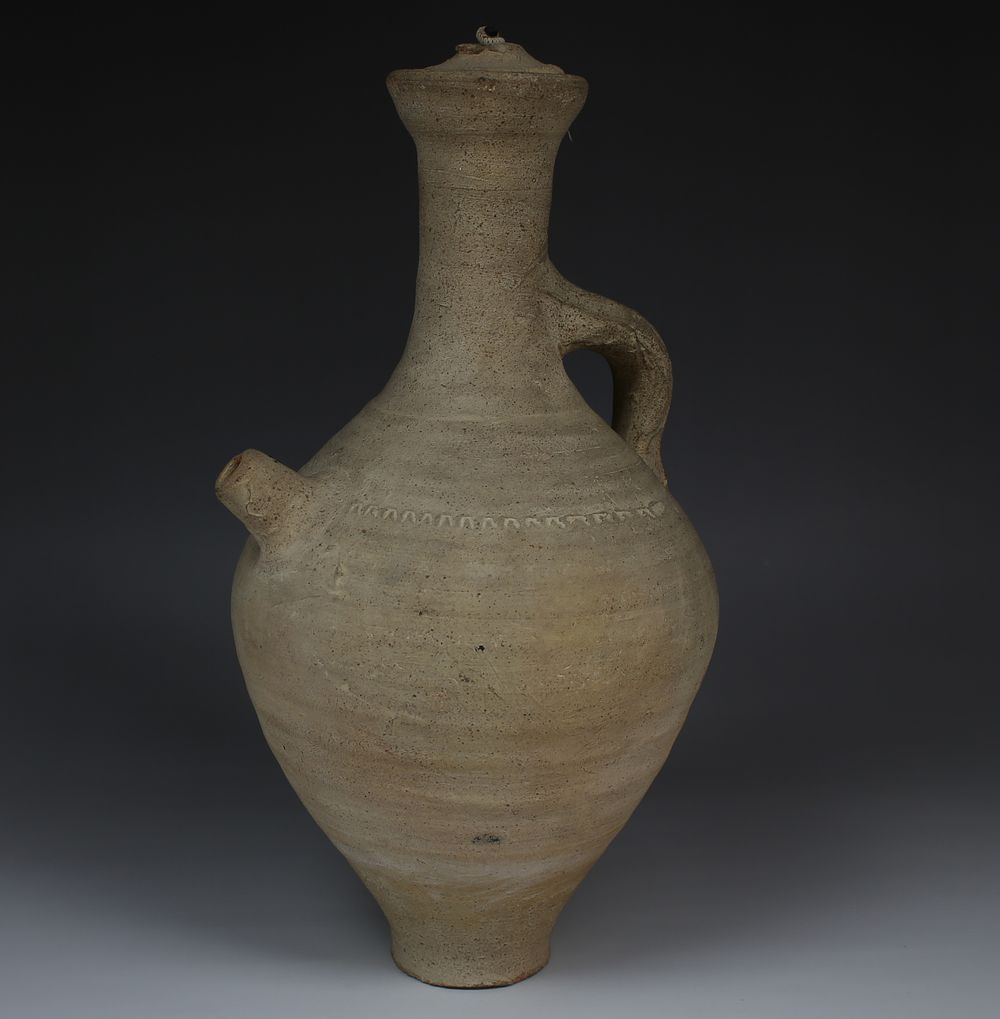
Byzantine spouted jug - ITEM: Spouted jug with engraved Π-decor. MATERIAL: Pottery CULTURE: Early Byzantine PERIOD: 5th - 7th Century A.D DIMENSIONS: 290 mm x 155 mm CONDITION: Good condition PROVENANCE: Ex German private collection, G.S., acquired since 1966 Comes with Certificate of Authenticity and Export Licence. If you are from outside the European Union, we will have to apply for the export licence again for your country, this takes 3 to 5 weeks and has a cost of 5% of the hammer price, this amount will be added to the final invoice. The Byzantine spouted jug is a distinctive type of ceramic vessel that played an important role in Byzantine daily life, particularly in the context of both domestic and ceremonial use. These jugs, typically made of pottery or sometimes of glass, are characterized by their spout, which extends from the main body of the jug, often with a curved or slightly flared shape. The spout allowed for a controlled pour of liquids such as wine, water, or oil, which was essential for both everyday activities and religious rituals. In Byzantine society, the spouted jug was a common household item, used for serving liquids during meals, feasts, and religious ceremonies, particularly within the context of Christian rites like baptisms and Eucharistic rituals. The design of Byzantine spouted jugs varied over time, with early examples often having simple, utilitarian forms, while later versions became more refined, featuring elaborate decorations and symbolic imagery. Some jugs were adorned with intricate geometric patterns or figural depictions, including Christian symbols such as crosses, angels, or saints. These decorations served not only to beautify the jug but also to reflect the religious and cultural values of the Byzantine Empire, where art was deeply intertwined with spirituality. The use of symbols and iconography on these vessels also reflected the era’s emphasis on the divine and the sacred, with such jugs often being used in ecclesiastical settings or as part of religious offerings. Byzantine spouted jugs were made using various techniques, with some being wheel-thrown while others were hand-built. The quality of the materials and craftsmanship varied depending on the status of the owner, with wealthier individuals having access to more elaborate and finely decorated versions, while simpler jugs were common in everyday use. The discovery of these jugs in archaeological sites provides valuable insights into Byzantine domestic life, trade, and religious practices.