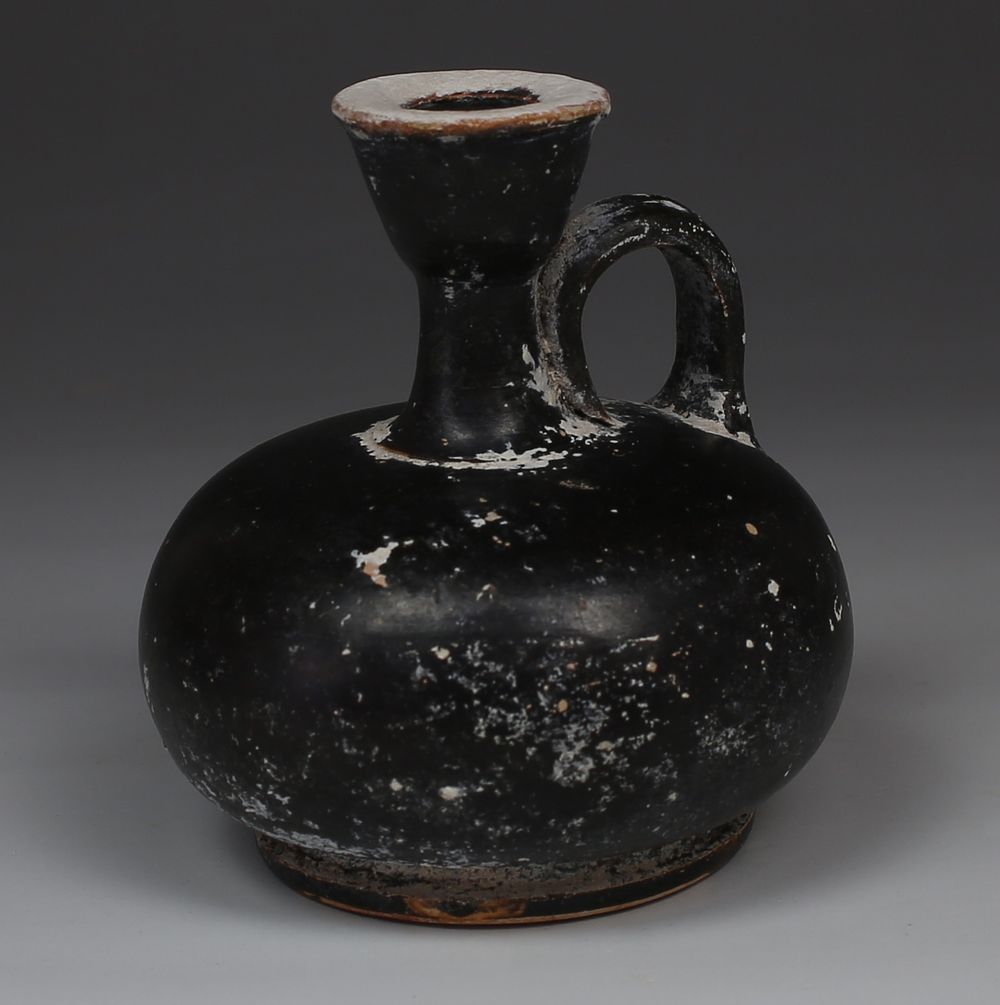
Subasta Bidspirit | Greek squat lekythos
Greek squat lekythos - ITEM: Squat lekythos MATERIAL: Pottery CULTURE: Greek PERIOD: 4th Century B.C DIMENSIONS: 75 mm x 70 mm diameter CONDITION: Good condition PROVENANCE: Ex French private collection, acquired between 1970 - 1990 Comes with Certificate of Authenticity and Export Licence. If you are from outside the European Union, we will have to apply for the export licence again for your country, this takes 3 to 5 weeks and has a cost of 5% of the hammer price, this amount will be added to the final invoice. The Greek squat lekythos is a distinctive type of pottery vessel that was widely used in ancient Greece, particularly during the late Archaic and Classical periods. The squat lekythos, characterized by its round, flattened body and a small, narrow neck, was typically used for storing and dispensing oil, especially olive oil, which was an essential part of daily life in ancient Greece. Its squat shape made it practical for holding oils used in cooking, personal grooming, and religious rituals, while the narrow neck allowed for controlled pouring. Often, these vessels were designed to be highly functional, but they also featured artistic decoration that reflected the cultural and aesthetic values of the time. The decoration on Greek squat lekythoi was typically done in the black-figure or red-figure style, both of which were popular during different periods of Greek pottery. The black-figure technique, where figures were painted in a black slip and then fired in a kiln, dominated before the 5th century BCE, while the red-figure technique, which allowed for more detailed and intricate depictions of human figures, took over during the Classical period. The imagery on these vessels often depicted scenes from daily life, such as offerings to the gods, funerary practices, or athletic contests. Many squat lekythoi, especially those used in funerary contexts, were adorned with scenes illustrating the departure of the deceased's soul or the ritual of laying out the body, making them both utilitarian and symbolic. In addition to their function and decoration, squat lekythoi had a significant role in Greek burial practices. They were commonly used as funerary offerings, particularly in the context of the deceased's grave goods. The lekythos was placed in tombs, often beside the body, filled with oil, or sometimes unfilled as a symbol of the offering to the gods. The representation of everyday activities on the vessels, such as bathing, athletic competitions, and feasting, could symbolize the continuity of life and the hope for a peaceful afterlife.