Subasta Bidspirit | Roman counterfeit coin mold
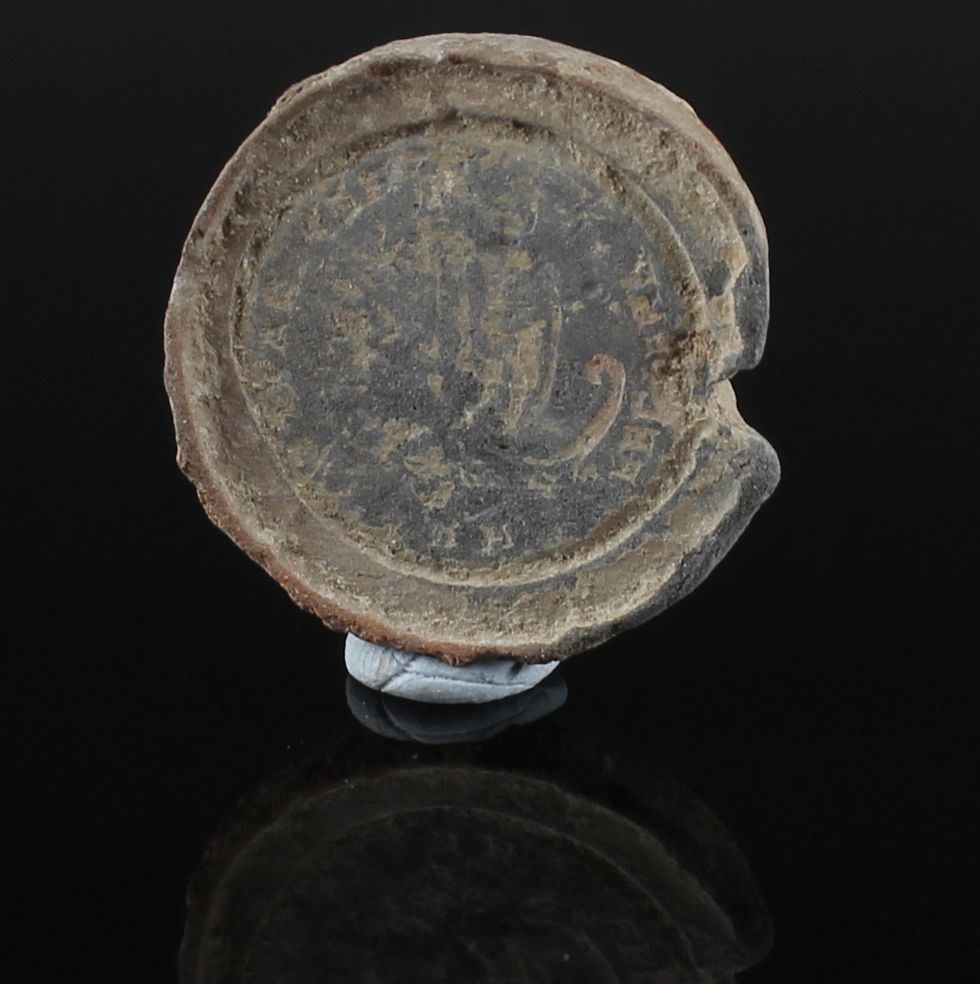
Roman counterfeit coin mold - ITEM: Counterfeit coin mold MATERIAL: Pottery CULTURE: Roman PERIOD: 4th Century A.D DIMENSIONS: 29 mm diameter CONDITION: Good condition PROVENANCE: Ex American private collection, acquired before 2000s Comes with Certificate of Authenticity and Export Licence. If you are from outside the European Union, we will have to apply for the export licence again for your country, this takes 3 to 5 weeks and has a cost of 5% of the hammer price, this amount will be added to the final invoice. Roman counterfeit coin molds provide a fascinating glimpse into the underground economies and the sophistication of coin production in the ancient world. These molds, typically made of metal or stone, were used to create fraudulent copies of Roman coins, often forgeries that sought to replicate the designs and weight of legitimate currency. Counterfeiting was a widespread issue in the Roman Empire, especially during times of economic strain when emperors debased the coinage to fund military campaigns or government projects. Molds allowed counterfeiters to produce large quantities of fake coins, which could be circulated to undermine the value of the official currency or to profit from the difference in metal content between the genuine and fake coins. The techniques used by counterfeiters varied, but they often involved pouring molten metal, usually a cheaper alloy, into molds that mimicked the design of Roman coins. These molds were crafted with remarkable precision, showcasing the skill and knowledge of ancient forgers. The quality of the forgeries ranged from crude, poorly executed imitations to nearly indistinguishable replicas that could easily deceive even experienced coiners. Some counterfeit coins were intentionally altered in minor ways—such as altering inscriptions or details of the emperor’s portrait—to make them harder to trace. This adaptability in counterfeiting shows how forgers were able to respond to changes in coinage, as the Roman Empire issued a wide variety of coins with different sizes, materials, and designs over the centuries. Roman counterfeit coin molds have been discovered in various archaeological sites, particularly in places where the Empire's reach was less centralized or where economic instability was more pronounced. The presence of these molds in ancient workshops or hidden caches suggests the existence of organized, illicit coin minting operations. These counterfeit coins were often used to finance illicit activities, and the presence of counterfeit coin molds also underscores the challenges faced by the Roman government in policing its currency.