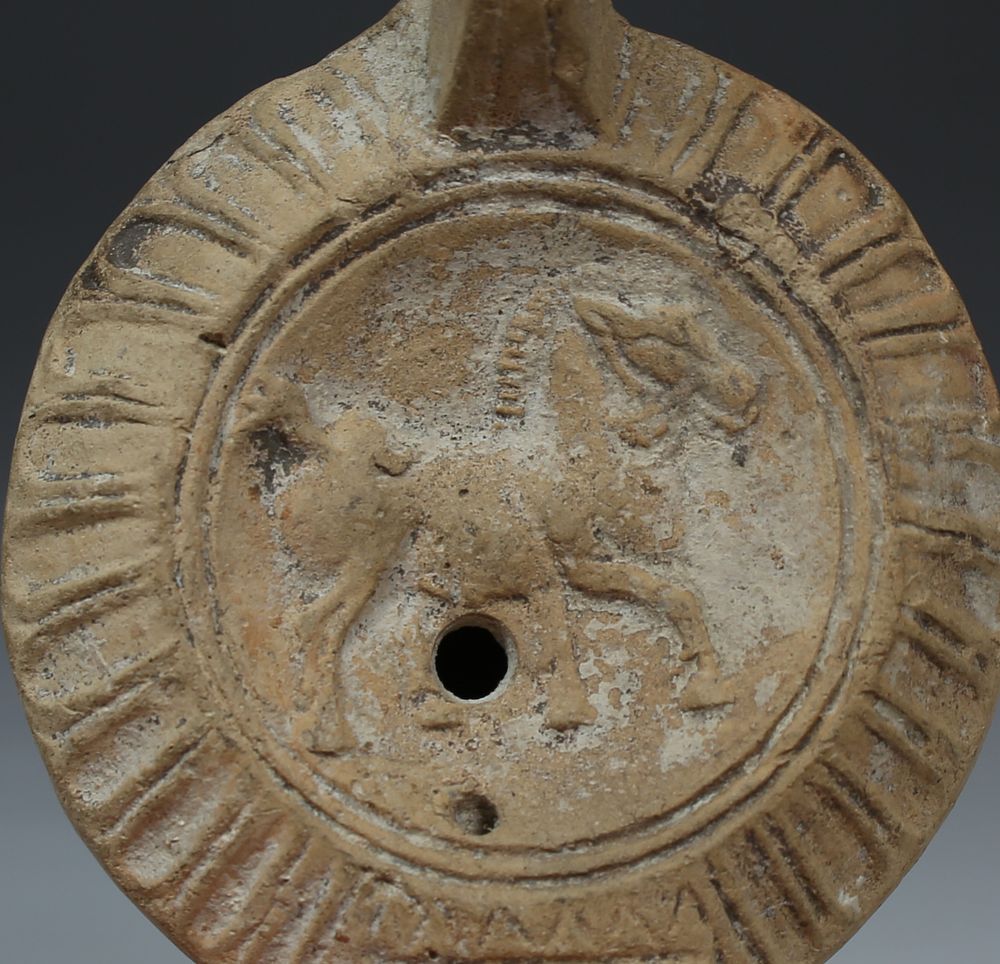
Subasta Bidspirit | Roman oil lamp depicting a
Roman oil lamp depicting a horse - ITEM: Oil lamp depicting a horse MATERIAL: Pottery CULTURE: Roman PERIOD: 1st - 3rd Century A.D DIMENSIONS: 40 mm x 67 mm x 98 mm CONDITION: Good condition PROVENANCE: Ex French private collection, acquired between 1970 - 1990 Comes with Certificate of Authenticity and Export Licence. If you are from outside the European Union, we will have to apply for the export licence again for your country, this takes 3 to 5 weeks and has a cost of 5% of the hammer price, this amount will be added to the final invoice. Roman oil lamps were essential household items throughout the Roman Empire, serving as the primary source of illumination in homes, temples, and public spaces from around the 3rd century BCE through late antiquity. These lamps were typically made of clay or terracotta, though some luxurious versions were crafted in bronze or other metals for wealthier patrons. Designed with a small, shallow reservoir to hold oil—most commonly olive oil—and a spout for the wick, Roman oil lamps were simple yet effective in providing light after sunset. Their portability made them versatile for both indoor and outdoor use, from domestic activities to religious ceremonies. The designs of Roman oil lamps varied widely and often reflected the cultural, artistic, and religious values of their time. Simple lamps had minimal decoration and were purely utilitarian, while others were intricately decorated with motifs such as mythological scenes, animals, or gods and goddesses. Lamps featuring figures of deities like Venus, Mercury, or Bacchus were common and served as symbols of protection and blessing. Some lamps even depicted scenes from Roman life or famous gladiator battles, showing the influence of popular culture on everyday objects. The variety of decorative elements also highlights the skilled craftsmanship of Roman artisans, who often used molds to create detailed reliefs on the lamps’ surfaces. In addition to their practical use, Roman oil lamps held significant cultural and religious symbolism. They were frequently placed in graves and tombs as part of funerary customs, symbolizing light for the deceased in the afterlife. Oil lamps were also used in rituals and as offerings in temples, particularly in domestic cults where they served as an act of devotion to household gods or protective deities. Lamps have been discovered across the vast Roman Empire, from Britain to Egypt, providing valuable archaeological insights into daily life, trade networks, and religious practices.