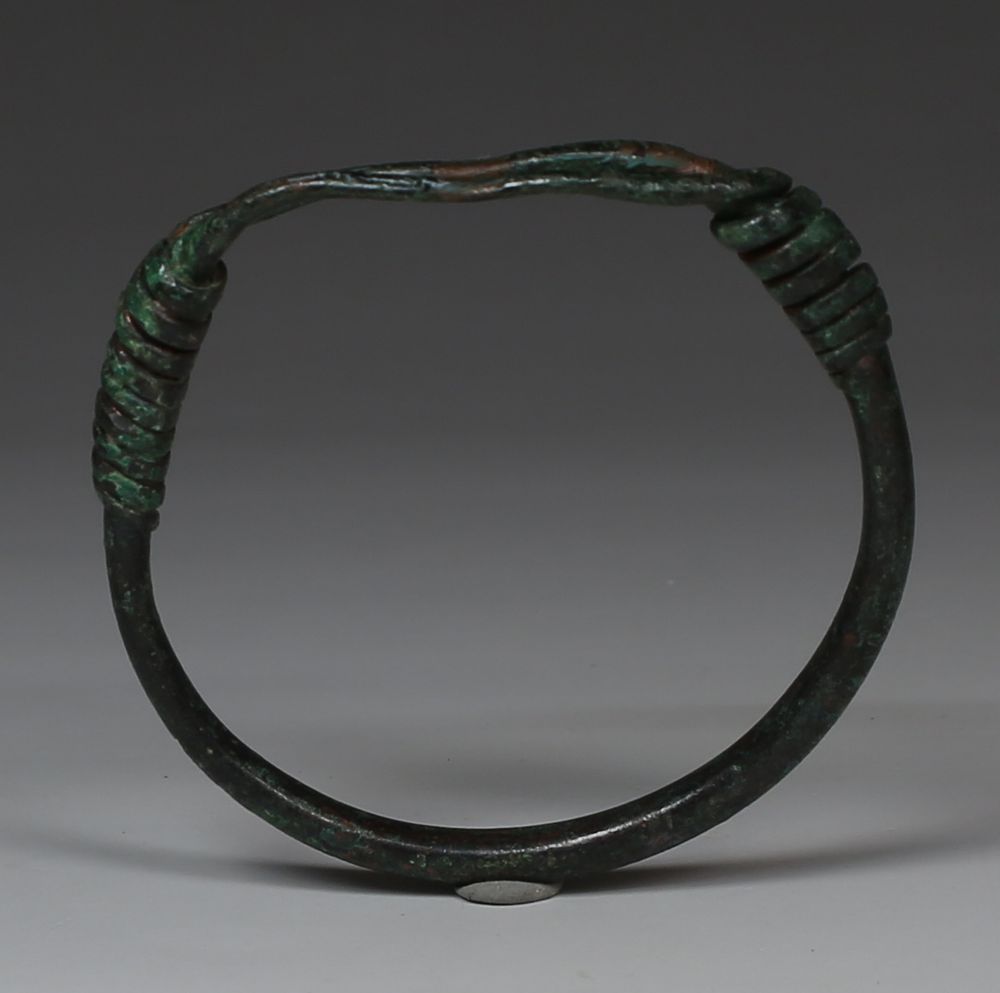
Subasta Bidspirit | Roman bracelet
Roman bracelet - ITEM: Bracelet MATERIAL: Bronze CULTURE: Roman PERIOD: 2nd - 3rd Century A.D DIMENSIONS: 64 mm x 67 mm CONDITION: Good condition PROVENANCE: Ex English private collection, London, acquired from art market before 2000s Comes with Certificate of Authenticity and Export Licence. If you are from outside the European Union, we will have to apply for the export licence again for your country, this takes 3 to 5 weeks and has a cost of 5% of the hammer price, this amount will be added to the final invoice. Roman bracelets were popular accessories worn by men, women, and even children across various social classes throughout the Roman Empire. These bracelets, made from a range of materials including gold, silver, bronze, glass, and iron, were both decorative and symbolic. Wealthier Romans favored bracelets made of precious metals and gemstones, which displayed their social status and wealth, while those of more modest means wore simpler versions made of bronze or iron. Some bracelets were adorned with intricate designs, engraved patterns, and inlays of glass or colored stones, reflecting the Roman love for beauty and craftsmanship in personal adornment. Designs of Roman bracelets varied widely, often reflecting cultural influences from the diverse regions within the Empire. Some bracelets featured open-ended designs with stylized animal heads, such as lions, snakes, or eagles, each carrying symbolic meaning, while others were fully enclosed with elaborate detailing. Snake-shaped bracelets, for example, were quite popular and symbolized protection and healing, as the serpent was associated with the god Asclepius. Other bracelets bore inscriptions or engraved symbols, possibly functioning as talismans or amulets believed to bring good luck, health, or protection to the wearer. These decorative and symbolic elements illustrate the Romans’ appreciation for jewelry as both an art form and a source of personal meaning. Bracelets were also significant in Roman religious and funerary contexts. They were often left as offerings at temples or placed in graves as part of burial rites, symbolizing the individual’s status or personal beliefs in the afterlife.