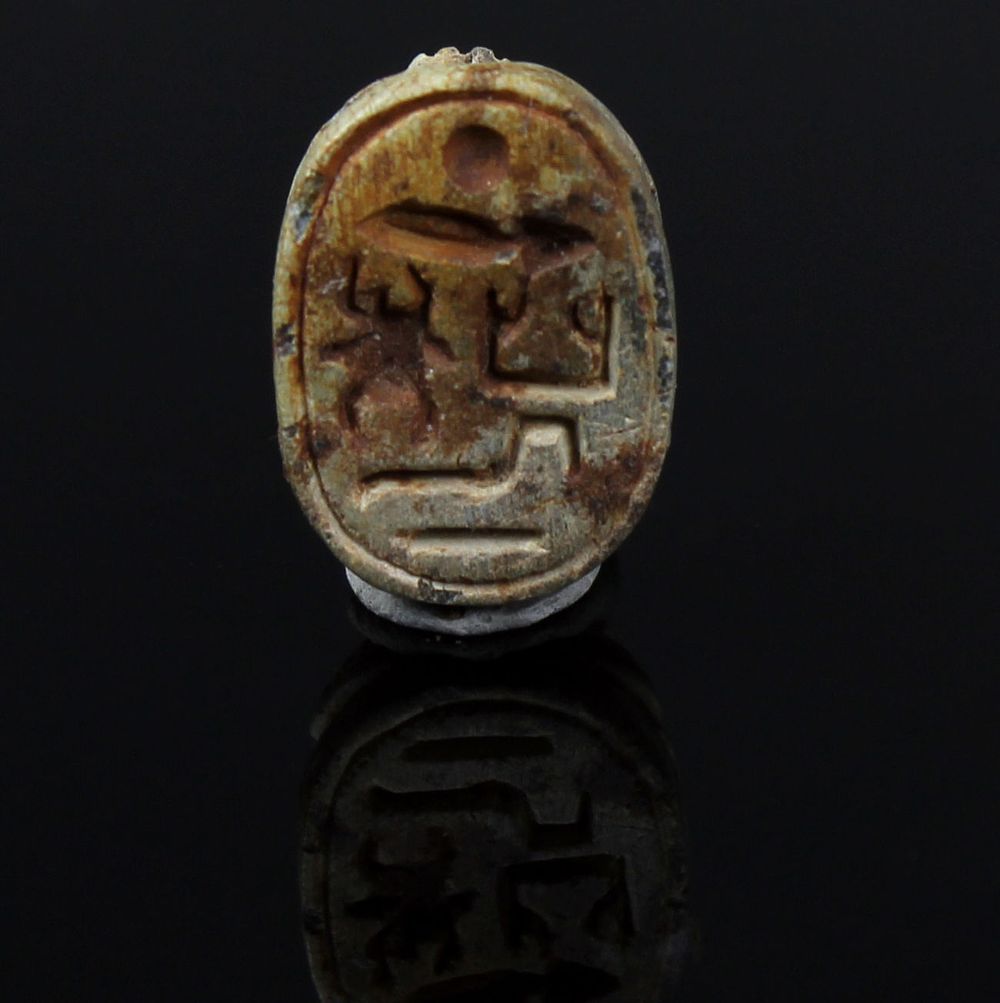
Subasta Bidspirit | Egyptian scarab with prenomen for
Egyptian scarab with prenomen for Amenhotep II - ITEM: Scarab with prenomen for Amenhotep II MATERIAL: Steatite CULTURE: Egyptian PERIOD: New Kingdom, XVIII Dynasty, 1443 – 1417 B.C DIMENSIONS: 15 mm x 11 mm CONDITION: Good condition PROVENANCE: Ex American egyptologist collection, active in the early part of the 20th century, brought to the US with the family in 1954. Comes with Certificate of Authenticity and Export Licence. If you are from outside the European Union, we will have to apply for the export licence again for your country, this takes 3 to 5 weeks and has a cost of 5% of the hammer price, this amount will be added to the final invoice. Amenhotep II, the seventh pharaoh of the 18th Dynasty of ancient Egypt, ruled during the New Kingdom period around the 15th century BCE. Renowned for his military prowess, Amenhotep II expanded the Egyptian empire through numerous campaigns, solidifying control over territories in Nubia and the Levant. His expeditions into Syria and Canaan, notably the Battle of Megiddo, showcased his strategic acumen as he secured victories against local rebellions and coalitions, leaving behind inscriptions and reliefs that celebrated his triumphs. Beyond his military endeavors, Amenhotep II also left a mark through his architectural projects, albeit less pronounced compared to other pharaohs. He oversaw the construction of temples and monuments across Egypt, contributing to the cultural landscape of the time. Additionally, Amenhotep II was known for his personal interests in sports and physical activities, with depictions showcasing him engaging in hunting, chariot racing, and archery, reflecting the pursuits of Egyptian nobility and emphasizing the ideal of the warrior-king. While Amenhotep II’s reign brought stability and prosperity to Egypt, his legacy is overshadowed by some of his predecessors and successors. Despite his military successes and contributions to Egyptian architecture, he is not as widely celebrated as figures like Thutmose III or Ramses II.