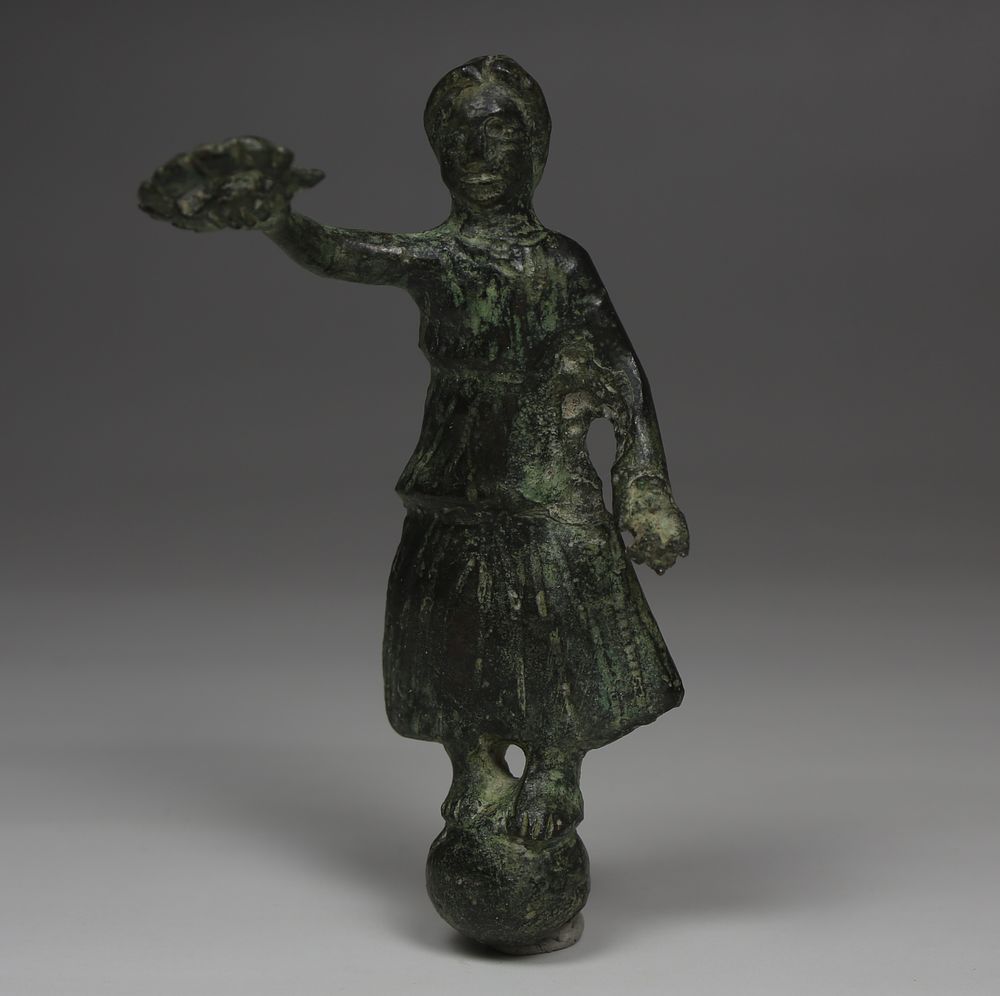
Subasta Bidspirit | Roman statuette of Victory with
Roman statuette of Victory with wreath on globe - ITEM: Statuette of Victory with wreath on globe MATERIAL: Bronze CULTURE: Roman PERIOD: 1st Century A.D DIMENSIONS: 91 mm x 50 mm CONDITION: Good condition PROVENANCE: Ex Spanish private collection, bought in English auction house. Ex English private collection, London, acquired before 1990s. Comes with Certificate of Authenticity and Export Licence. If you are from outside the European Union, we will have to apply for the export licence again for your country, this takes 3 to 5 weeks and has a cost of 5% of the hammer price, this amount will be added to the final invoice. In ancient Rome, victory (victoria) held immense significance, both as a military achievement and as a concept embedded in Roman culture, religion, and politics. Roman victories were often celebrated with great fanfare, reflecting the martial values that underpinned Roman society. A Roman general, upon achieving a major victory in battle, could be awarded a triumph, a lavish ceremonial procession through the streets of Rome. During this grand event, the victorious general would parade with his army, captives, and the spoils of war, followed by sacrifices to the gods. The triumph symbolized not just personal honor but also Rome's military superiority and divine favor. The Romans attributed many of their victories to the favor of the gods, particularly to the goddess Victoria, who personified victory. Temples dedicated to Victoria, like the Temple of Victoria on the Palatine Hill, played a central role in religious and state-sponsored celebrations of military success. Offerings and dedications to the gods were common after victories, with victorious generals often commissioning altars, statues, or temples as acts of thanksgiving. This religious aspect of victory was intertwined with the belief that Rome's military success reflected its piety and adherence to divine will, fostering the idea of imperium—the Roman right to rule and conquer other nations. On a political level, victory was crucial for the careers of Roman politicians and generals. Success on the battlefield was often a pathway to higher office in the Roman Republic and later the Roman Empire. Military victories boosted the reputations of figures like Julius Caesar, who used his successes in Gaul and other regions to build political power. Victory also served as propaganda, reinforcing the image of Rome as an invincible force destined to rule the world. Roman monuments, such as victory arches (like the Arch of Titus) and columns (such as Trajan's Column), celebrated military conquests and immortalized the achievements of Roman emperors and generals, ensuring that their victories were remembered for generations.