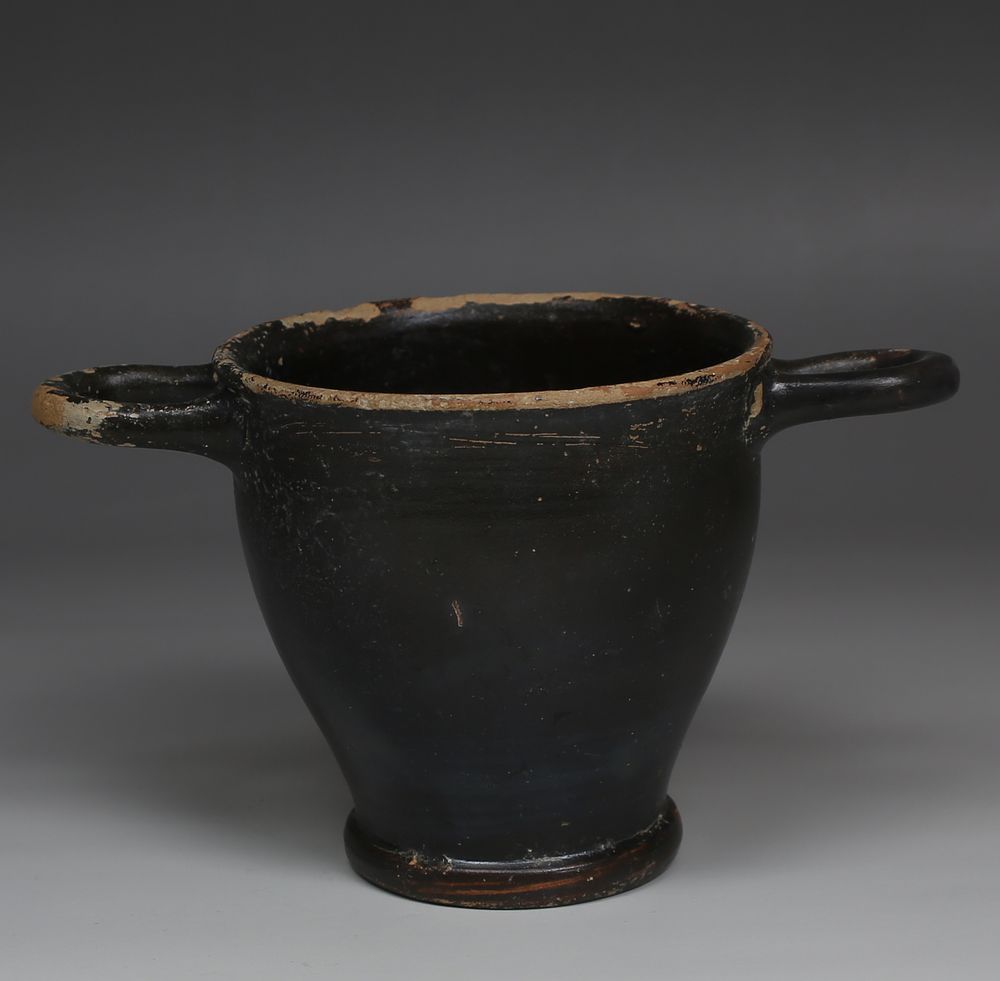
Subasta Bidspirit | Greek skyphos
Greek skyphos - ITEM: Skyphos MATERIAL: Pottery CULTURE: Greek PERIOD: 4th Century B.C DIMENSIONS: 75 mm x 123 mm x 77 mm CONDITION: Good condition PROVENANCE: Ex Dutch private collection, acquired before 1970s Comes with Certificate of Authenticity and Export Licence. If you are from outside the European Union, we will have to apply for the export licence again for your country, this takes 3 to 5 weeks and has a cost of 5% of the hammer price, this amount will be added to the final invoice. A Greek skyphos is a type of deep, two-handled drinking cup that was commonly used in Ancient Greece, particularly during the Archaic and Classical periods (around the 6th to 4th centuries BCE). Skyphoi (the plural of skyphos) typically feature a wide, deep bowl and two small horizontal handles placed near the rim, allowing the drinker to hold the vessel easily. They were used primarily for drinking wine, often at symposia—social gatherings where men would drink, converse, and enjoy music or poetry. The shape of the skyphos made it a practical and popular vessel in everyday life as well as in more formal settings. Skyphoi were often made of clay and decorated in either black-figure or red-figure painting styles, both of which were prominent in Greek pottery. The black-figure technique, where figures appear in black against a red clay background, was prevalent earlier, while the red-figure technique, where figures are left in red against a black background, became dominant later. The scenes depicted on skyphoi typically included mythological narratives, everyday life, and athletic or banquet scenes, reflecting the values and culture of the time. These decorated vessels not only served functional purposes but also conveyed artistic and cultural symbolism. Archaeological finds of skyphoi in various regions, including Greece, Italy, and the wider Mediterranean, indicate their widespread use and trade. Some skyphoi were made of metal, particularly bronze, for wealthier patrons, and their presence in burial sites suggests they were also valued as grave goods.