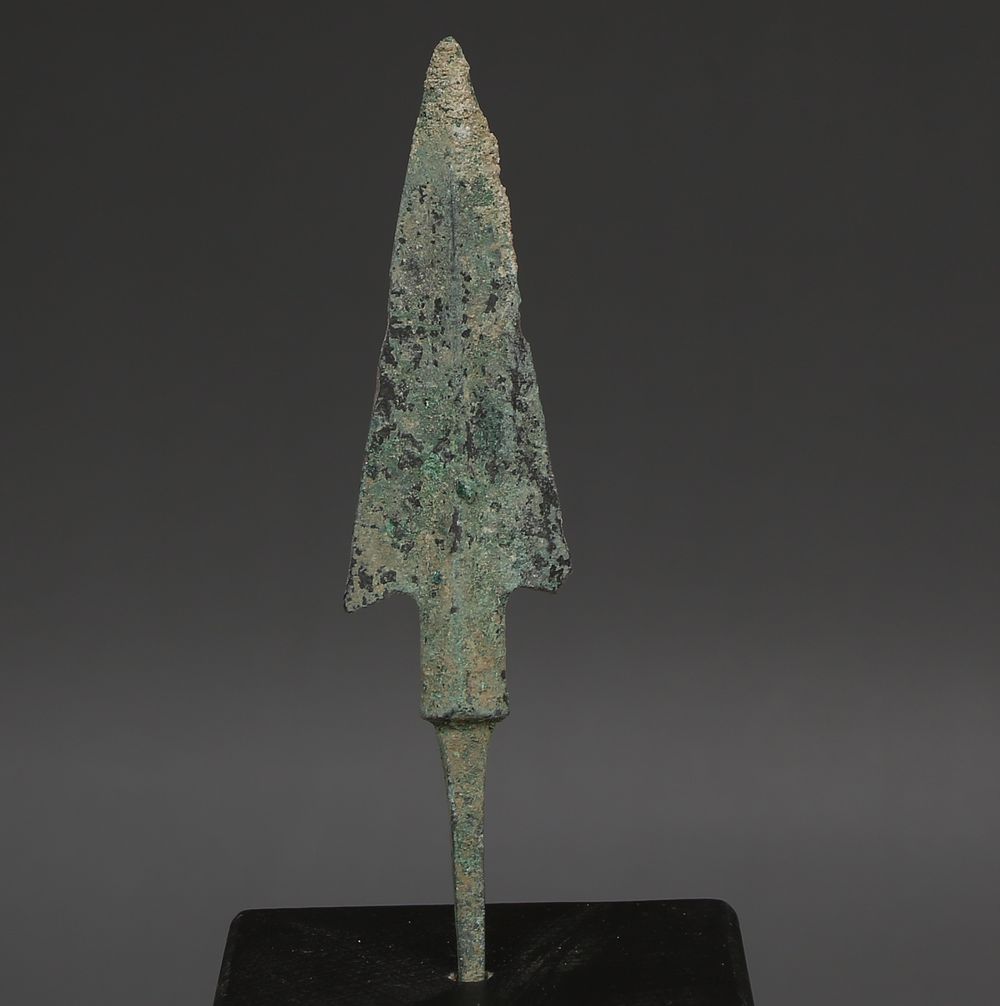
Subasta Bidspirit | Luristan arrowhead
Luristan arrowhead - ITEM: Arrowhead MATERIAL: Bronze CULTURE: Luristan PERIOD: 1st millenium B.C DIMENSIONS: 112 mm x 26 mm CONDITION: Good condition PROVENANCE: Ex English private collection, acquired between 1980 - 1990 Comes with Certificate of Authenticity and Export Licence. If you are from outside the European Union, we will have to apply for the export licence again for your country, this takes 3 to 5 weeks and has a cost of 5% of the hammer price, this amount will be added to the final invoice. The Luristan culture, primarily associated with the region of modern-day western Iran, flourished between the late second millennium BCE and the early first millennium BCE. This culture is particularly known for its impressive bronze artifacts, including weapons, horse gear, and ceremonial objects. The Luristan region, located in the Zagros Mountains, was a crossroads of cultural interaction between Mesopotamia, Iran, and the highland tribes. As a result, the artistic style of the Luristan bronzes reflects a fusion of local traditions with influences from neighboring regions. These bronzes, often elaborately decorated with intricate designs, offer valuable insight into the region’s craftsmanship, warfare, and spiritual practices. One of the most significant aspects of the Luristan culture is its production of distinctive bronze objects, often found in grave sites and believed to be associated with rituals or burial ceremonies. The bronzes typically feature animal motifs, particularly those of horses, rams, and mythological creatures, which may have held symbolic or protective meanings. Some of the most iconic items from Luristan include horse bits, finials, and ceremonial axes. These objects suggest a society that placed great importance on horses and their role in warfare and prestige, as well as on complex spiritual beliefs. Despite the richness of its material culture, much about the Luristan civilization remains shrouded in mystery, largely because written records from the culture itself have not been found. Most of what is known comes from archaeological discoveries, especially burial sites. These artifacts, scattered across museums worldwide, have provided clues to the region's social hierarchy, economy, and cultural interactions.