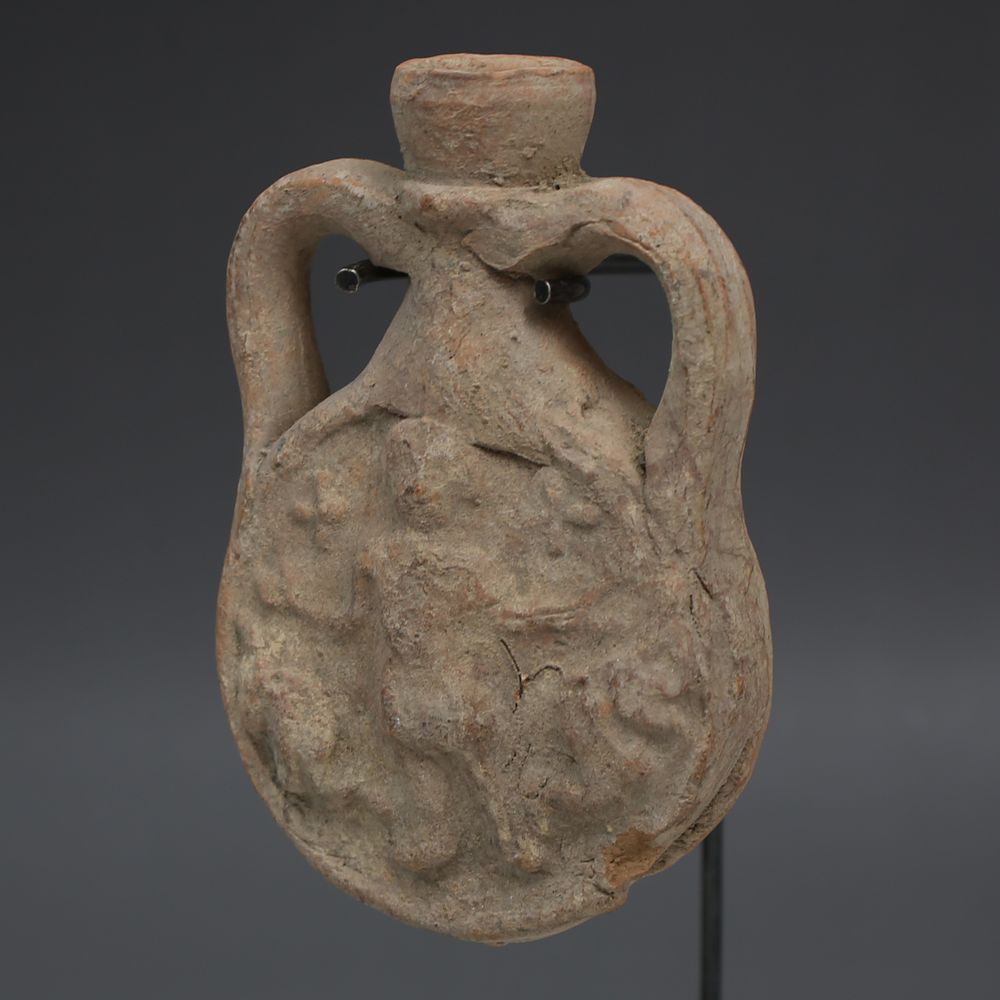
Subasta Bidspirit | Byzantine pilgrim flask (Ampulla) of
Byzantine pilgrim flask (Ampulla) of Saint Menas and Greek inscription - ITEM: Pilgrim flask (Ampulla) of Saint Menas and Greek inscription MATERIAL: Pottery CULTURE: Byzantine PERIOD: 7th Century A.D DIMENSIONS: 100 mm x 65 mm (without stand) CONDITION: Good condition PROVENANCE: Ex English private collection, acquired between 1960 - 1980 PARALLEL: The Metropolitan Museum of Art, Accession number 17.194.2291 Comes with Certificate of Authenticity and Export Licence. If you are from outside the European Union, we will have to apply for the export licence again for your country, this takes 3 to 5 weeks and has a cost of 5% of the hammer price, this amount will be added to the final invoice. The Saint Menas pilgrim flasks, originating from the Byzantine period (roughly 5th to 7th centuries CE), are iconic clay vessels used by Christian pilgrims who visited the shrine of Saint Menas in Egypt. Saint Menas was a revered Christian martyr, and his shrine, located in Abu Mena near Alexandria, was a major pilgrimage site during the Byzantine era. Pilgrims would purchase these flasks at the shrine to carry home holy water or oil, believed to have healing and protective properties. These flasks served not only as religious souvenirs but also as physical reminders of the spiritual journey. Typically made of terracotta, the Saint Menas pilgrim flasks are small, flat, and round with a pair of handles on either side of the body for easy portability. The flasks were often stamped with images of Saint Menas, who is usually depicted standing with outstretched arms, flanked by two camels. This imagery refers to the legend of his death and burial, in which camels miraculously carried his body to its final resting place. The flask's design was both symbolic and functional, encapsulating the holiness of the relics pilgrims brought back. These flasks provide valuable insights into the religious practices and devotional culture of Byzantine Christianity. They reflect the importance of pilgrimage in the lives of early Christians and illustrate the role of material objects in fostering a connection between the faithful and the divine. The widespread distribution of these flasks, discovered across the Mediterranean, indicates the far-reaching influence of Saint Menas' cult and the vibrant exchange of religious practices within the Byzantine world.