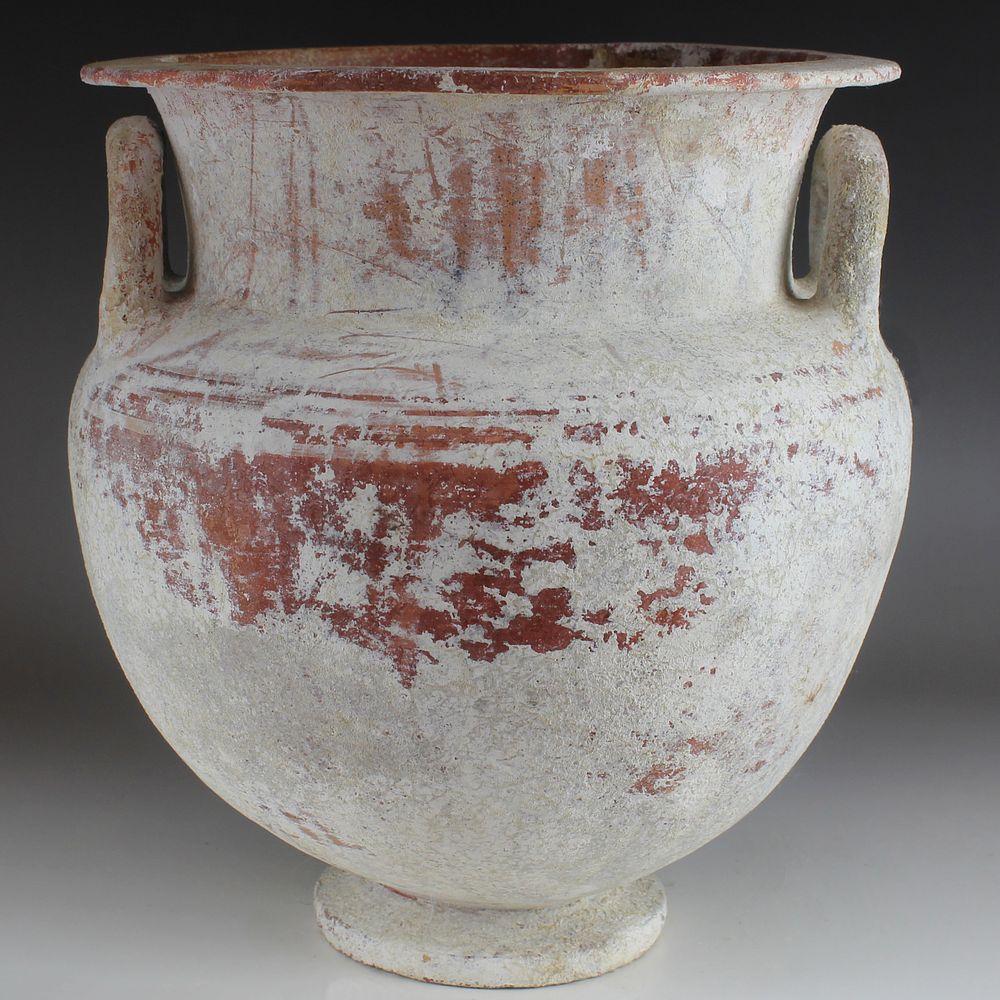
Subasta Bidspirit | Greek krater
Greek krater - ITEM: Krater MATERIAL: Pottery CULTURE: Greek PERIOD: 3rd - 1st Century B.C DIMENSIONS: 235 mm x 213 mm CONDITION: Good condition PROVENANCE: Ex German private collection, acquired before 1980s Comes with Certificate of Authenticity and Export Licence. If you are from outside the European Union, we will have to apply for the export licence again for your country, this takes 3 to 5 weeks and has a cost of 5% of the hammer price, this amount will be added to the final invoice. Greek kraters are significant ancient ceramic vessels used primarily for mixing wine with water, reflecting important aspects of Greek social and religious practices. Typically large and robust, kraters feature a broad, open mouth, a deep bowl, and often two or more handles, allowing for the easy mixing and serving of beverages. The krater’s size and shape were designed to accommodate the volume of liquid needed for communal drinking, which was a central activity in Greek symposiums, or drinking parties. The design of the krater made it ideal for serving wine, which was diluted with water to achieve the desired taste and strength. The decoration of Greek kraters is particularly noteworthy, showcasing the artistic achievements of ancient Greek potters. Kraters were often adorned with intricate scenes painted in either the black-figure or red-figure technique. The black-figure technique involved painting figures in a black slip on the natural red clay, while the red-figure technique, which emerged later, allowed for more detailed and dynamic depictions by painting the background black and leaving the figures in red. Common motifs included mythological narratives, athletic contests, and scenes of everyday life. These artistic elements not only enhanced the aesthetic appeal of the krater but also provided valuable insights into Greek cultural and religious beliefs. The use of kraters in Greek society went beyond their practical function; they were also significant in ceremonial and ritual contexts. Kraters were often employed in religious sacrifices, where wine was poured into the vessel as part of offerings to the gods. Their presence in archaeological contexts, such as burial sites and sanctuaries, highlights their role in both public and private rituals.