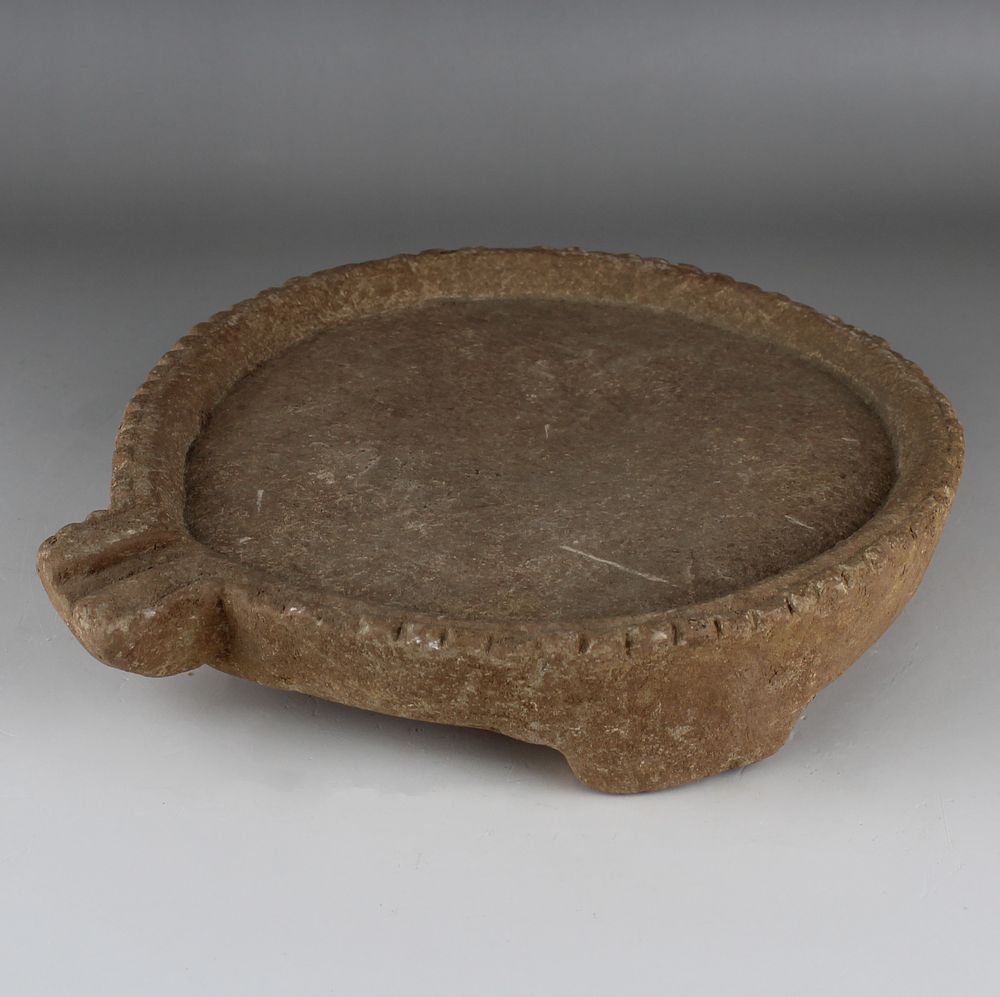
Subasta Bidspirit | Roman mortar tripod
Roman mortar tripod - ITEM: Mortar tripod MATERIAL: Stone CULTURE: Roman, Judaea PERIOD: 1st - 2nd Century A.D DIMENSIONS: 50 mm x 225 mm diameter CONDITION: Good condition PROVENANCE: Ex German private collection, collector and galerist, acquired before 1990s PARALLEL: Israel Antiquities Authority number: 1982-265, Geva H. 2010. Stone artifacts, in: H. Geva (ed.) Jewish Quarter Excavations in the Old City of Jerusalem vol. IV. Jerusalem, 157-160, Pl. 5.1: 5 Comes with Certificate of Authenticity and Export Licence. If you are from outside the European Union, we will have to apply for the export licence again for your country, this takes 3 to 5 weeks and has a cost of 5% of the hammer price, this amount will be added to the final invoice. The Roman mortar tripod, found in Judea during the Roman period, is an intriguing artifact that highlights the interaction between Roman and local cultures in the region. These tripods were functional items used primarily for grinding grains and spices. Typically made from durable materials such as stone or metal, the mortar tripod consisted of a large, bowl-shaped mortar that rested on three legs, often supported by a tripod base. The design of these tools reflects Roman practicality and their adaptation to various regional needs, including those in Judea, where such implements were integral to daily life and culinary practices. The use of stone for these mortars is significant due to its durability and effectiveness in grinding. Stone mortars were highly valued for their ability to withstand heavy use and for their ability to grind a variety of substances, from grains to herbs. In Judea, a region with a rich agricultural base, the presence of these stone mortars indicates the importance of processing grains and spices in the local economy. Roman influences on local craftsmanship are evident in the design and construction of these tripods, which often incorporated Roman engineering techniques and stylistic elements, blending with traditional local practices. Archaeological finds of Roman mortar tripods in Judea offer valuable insights into the daily lives of people living in the region during the Roman period. They reveal aspects of domestic and economic life, highlighting how Roman technology and culture were integrated into local traditions. The presence of these artifacts also underscores the extensive reach of Roman influence and the adaptation of Roman technologies to local contexts. By studying these mortars, scholars can gain a deeper understanding of the material culture of Roman Judea and the interactions between Roman authorities and local populations.