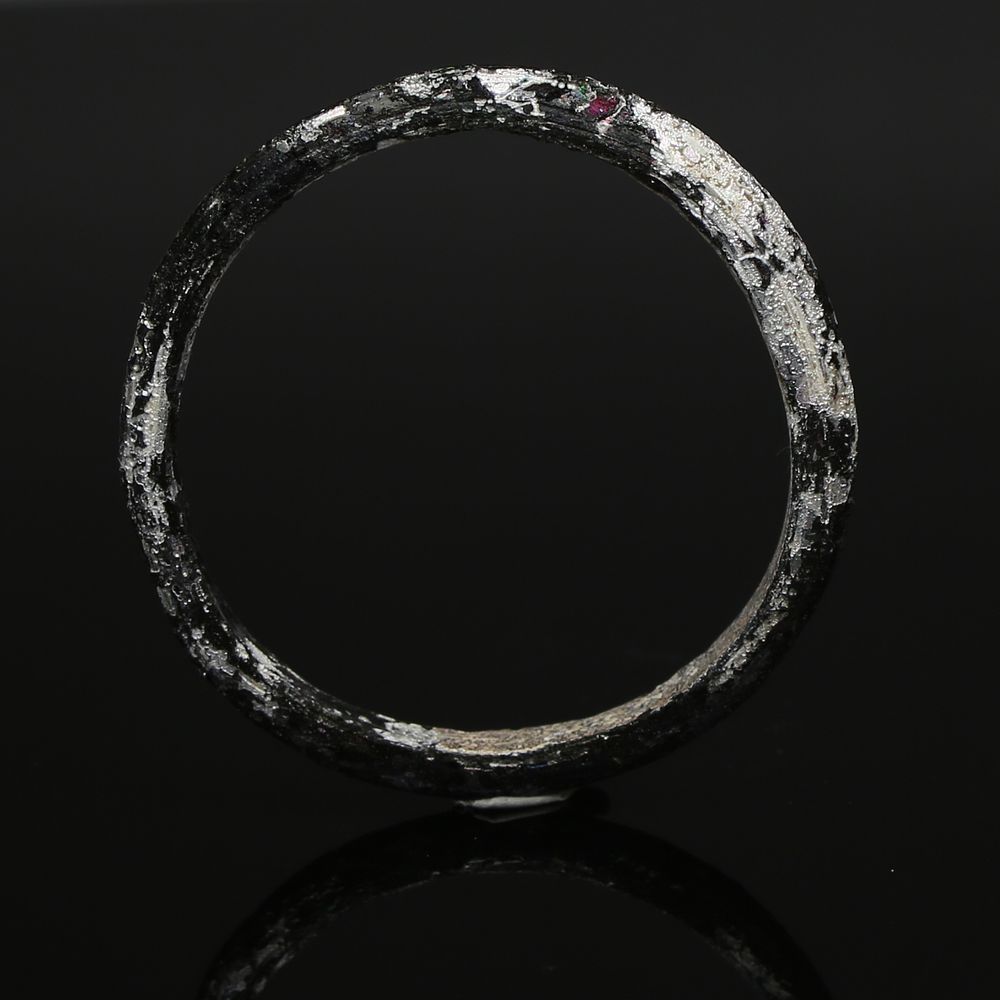
Subasta Bidspirit | Roman bracelet
Roman bracelet - ITEM: Bracelet MATERIAL: Glass CULTURE: Roman PERIOD: 1st - 3rd Century A.D DIMENSIONS: 45 mm diameter CONDITION: Good condition PROVENANCE: Ex Dutch private collection, acquired before 1990s Comes with Certificate of Authenticity and Export Licence. If you are from outside the European Union, we will have to apply for the export licence again for your country, this takes 3 to 5 weeks and has a cost of 5% of the hammer price, this amount will be added to the final invoice. Roman bracelets in glass are intriguing artifacts that reflect the sophistication and diversity of Roman jewelry-making practices. Unlike gold or silver bracelets, those made from glass were more affordable and accessible, often used by a broader segment of the population. These glass bracelets were crafted using techniques such as glass-blowing and core-forming, which allowed for the creation of intricate designs and vibrant colors. The use of glass in jewelry demonstrates the Romans' ability to manipulate materials and their appreciation for both luxury and decorative art. The design of Roman glass bracelets often featured a variety of styles and embellishments. Some bracelets were simple and utilitarian, while others were elaborately decorated with patterns, millefiori (a technique where multiple colored glass canes are fused together), or geometric designs. The colors of Roman glass bracelets could be quite striking, with shades ranging from deep blues and greens to rich reds and yellows. The glass was sometimes combined with other materials, such as metal or gemstones, to enhance its visual appeal and to create more elaborate and fashionable pieces. These glass bracelets also provide valuable insights into the social and economic aspects of Roman life. They were not only personal adornments but also indicators of status and fashion within Roman society. The wide range of glass bracelets, from simple to ornate, suggests that this type of jewelry was versatile and suited various social classes and occasions. The study of these artifacts can reveal patterns of trade and cultural exchange, as the production and distribution of glass jewelry involved complex networks across the Roman Empire.