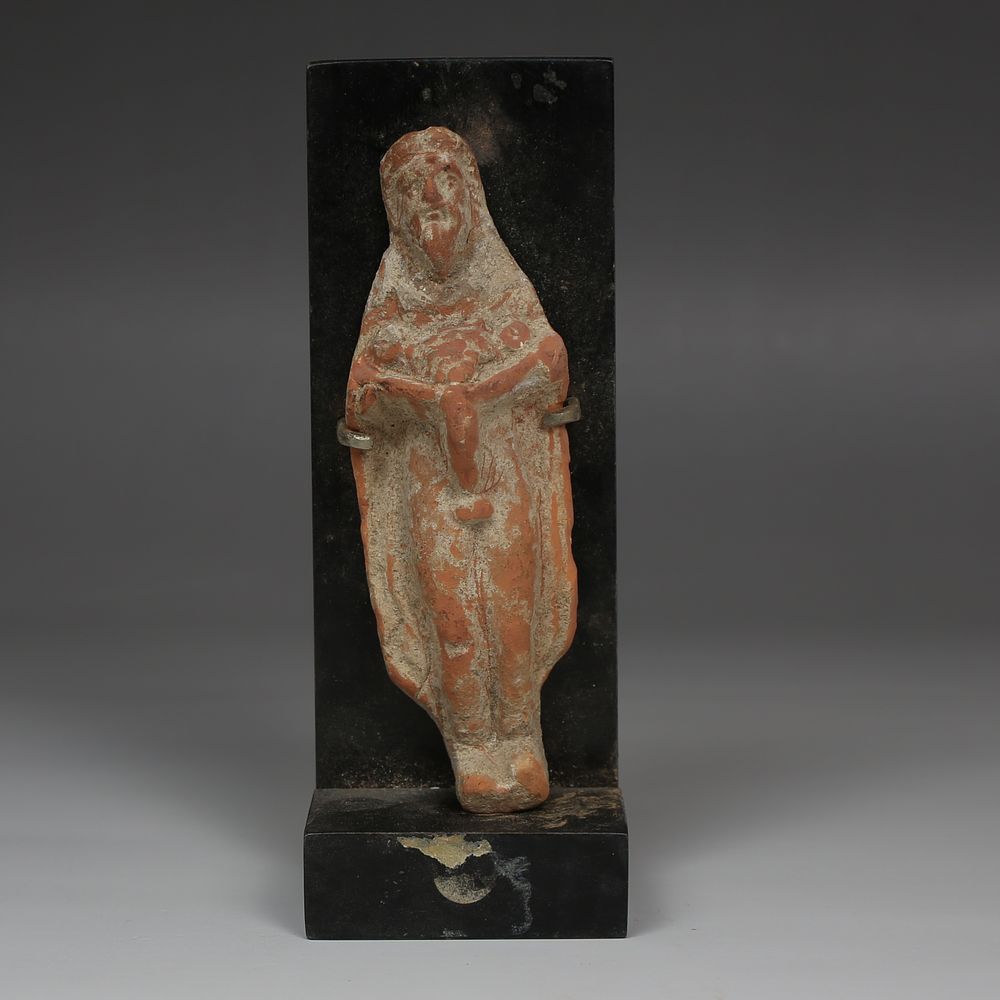
Subasta Bidspirit | Roman statuette of Priapus
Roman statuette of Priapus - ITEM: Statuette of Priapus MATERIAL: Pottery CULTURE: Roman PERIOD: 1st Century B.C - 1st Century A.D DIMENSIONS: 104 mm x 39 mm (without stand) CONDITION: Good condition. Includes stand PROVENANCE: Ex French private collection, acquired between 1980 - 1990 Comes with Certificate of Authenticity and Export Licence. If you are from outside the European Union, we will have to apply for the export licence again for your country, this takes 3 to 5 weeks and has a cost of 5% of the hammer price, this amount will be added to the final invoice. Roman Priapus, a deity of fertility, agriculture, and male potency, was a prominent figure in Roman religion and culture. Originating from earlier Greek traditions, Priapus was worshipped in both rural and urban settings, often associated with gardens, orchards, and livestock. He was depicted as a rustic god with an exaggerated phallic symbol, which was intended to ward off evil spirits and ensure fertility and prosperity. Priapus's representations often combined humor and fertility symbolism, reflecting both his protective role and the more earthy aspects of Roman religious practice. The worship of Priapus involved various rituals and offerings, particularly in agricultural settings. Statues and figurines of Priapus were commonly placed in gardens and fields to safeguard crops and ensure a good harvest. These depictions frequently featured him with a prominent erect phallus, emphasizing his association with fertility and reproductive success. In Roman homes, Priapus was sometimes included in domestic spaces to protect the household and ensure the well-being of the family. His presence in these spaces underscores the integration of religious beliefs into daily life and the importance of securing divine favor for personal and economic prosperity. Priapus's role and representation in Roman culture also reflect broader themes in Roman religion and art. His depiction was not only a reflection of fertility and abundance but also a way to address the anxieties and needs of agricultural and domestic life. Roman Priapus embodies the Roman approach to deities, which often involved blending earlier religious traditions with local beliefs and practices.