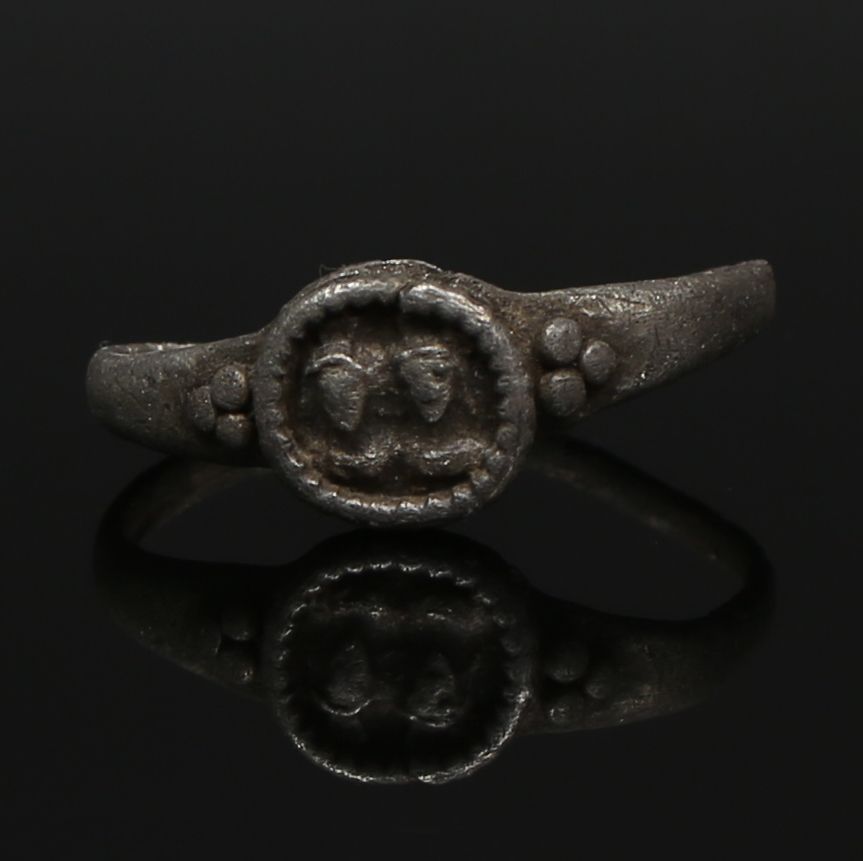
Subasta Bidspirit | Byzantine marriage ring
Byzantine marriage ring - ITEM: Marriage ring MATERIAL: Silver CULTURE: Byzantine PERIOD: 5th - 7th Century A.D DIMENSIONS: 20 mm x 26 mm CONDITION: Broken PROVENANCE: Ex Austrian private collection, acquired in the 1990s Comes with Certificate of Authenticity and Export Licence. If you are from outside the European Union, we will have to apply for the export licence again for your country, this takes 3 to 5 weeks and has a cost of 5% of the hammer price, this amount will be added to the final invoice. Marriage rings from the Byzantine period offer a fascinating glimpse into the personal and cultural practices of the Byzantine Empire, which spanned from the 4th to the 15th centuries CE. These rings were often crafted from precious metals such as gold or silver and sometimes adorned with gemstones or intricate designs. Unlike their Roman predecessors, Byzantine marriage rings frequently featured Christian symbols, reflecting the religious and cultural transformation of the empire. Common motifs included crosses, inscriptions, and religious icons, which not only symbolized the sanctity of the marriage bond but also served as a testament to the couple's faith. The design and craftsmanship of Byzantine marriage rings reveal the high level of artistry and attention to detail in Byzantine jewelry. Artisans employed various techniques, including engraving, enameling, and the setting of gemstones, to create rings that were both aesthetically pleasing and meaningful. Rings from this period often included inscriptions in Greek, such as the names of the couple or biblical verses, which imbued the ring with a personal and spiritual significance. The use of symbolism and religious iconography in these rings underscores the importance of marriage as a sacred institution in Byzantine society and highlights the influence of Christianity on everyday life. The study of Byzantine marriage rings also provides insights into social customs and status during this period. These rings were not only personal tokens of love and commitment but also indicators of social standing and wealth. The quality of the materials and the complexity of the designs could reflect the couple's affluence and position within society. Additionally, the surviving examples of Byzantine marriage rings found in archaeological contexts, such as churches and graves, offer valuable information about the distribution of jewelry and the practices associated with marriage and personal adornment in the Byzantine Empire.