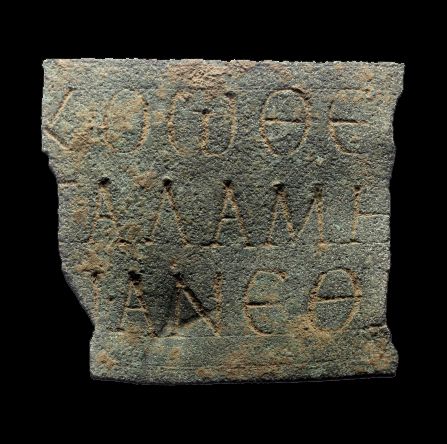
Subasta Bidspirit | Roman tabula fragment with inscription
Roman tabula fragment with inscription - ITEM: Tabula fragment with inscription MATERIAL: Bronze CULTURE: Roman PERIOD: 2nd - 3rd Century A.D DIMENSIONS: 52 mm x 56 mm CONDITION: Good condition PROVENANCE: Ex Dutch private collection, acquired between 1990 - 2010 Comes with Certificate of Authenticity and Export Licence. If you are from outside the European Union, we will have to apply for the export licence again for your country, this takes 3 to 5 weeks and has a cost of 5% of the hammer price, this amount will be added to the final invoice. Roman tabulas with inscriptions are significant artifacts that provide valuable insights into the administrative, legal, and social practices of ancient Rome. These tabulas, typically made from materials such as bronze, marble, or stone, were used to record important information, including legal decrees, official records, or public notices. The inscriptions on these tablets were often engraved with precision and served various purposes, such as documenting laws, commemorating events, or recording civic honors. The use of tabulas was essential for the functioning of Roman bureaucracy and legal systems, reflecting the empire’s sophisticated approach to record-keeping and governance. One notable example of Roman tabulas with inscriptions is the Lex Irnitana, a marble tablet inscribed with a legal text from the Roman province of Hispania. This tablet provides insights into local administrative practices and legal norms during the Roman Empire. The inscriptions on such tablets were typically written in Latin and adhered to a formalized style, ensuring clarity and consistency in the documentation of legal and administrative matters. The use of tabulas for legal inscriptions highlights the importance of written records in maintaining order and ensuring the implementation of laws and policies across the vast Roman Empire. In addition to their administrative functions, Roman tabulas with inscriptions also served as commemorative and propagandistic tools. For instance, some tabulas were erected to celebrate military victories, honor public figures, or commemorate significant events. These inscriptions often included details about the achievements of emperors, generals, or other notable individuals, serving to reinforce their legacy and public image.