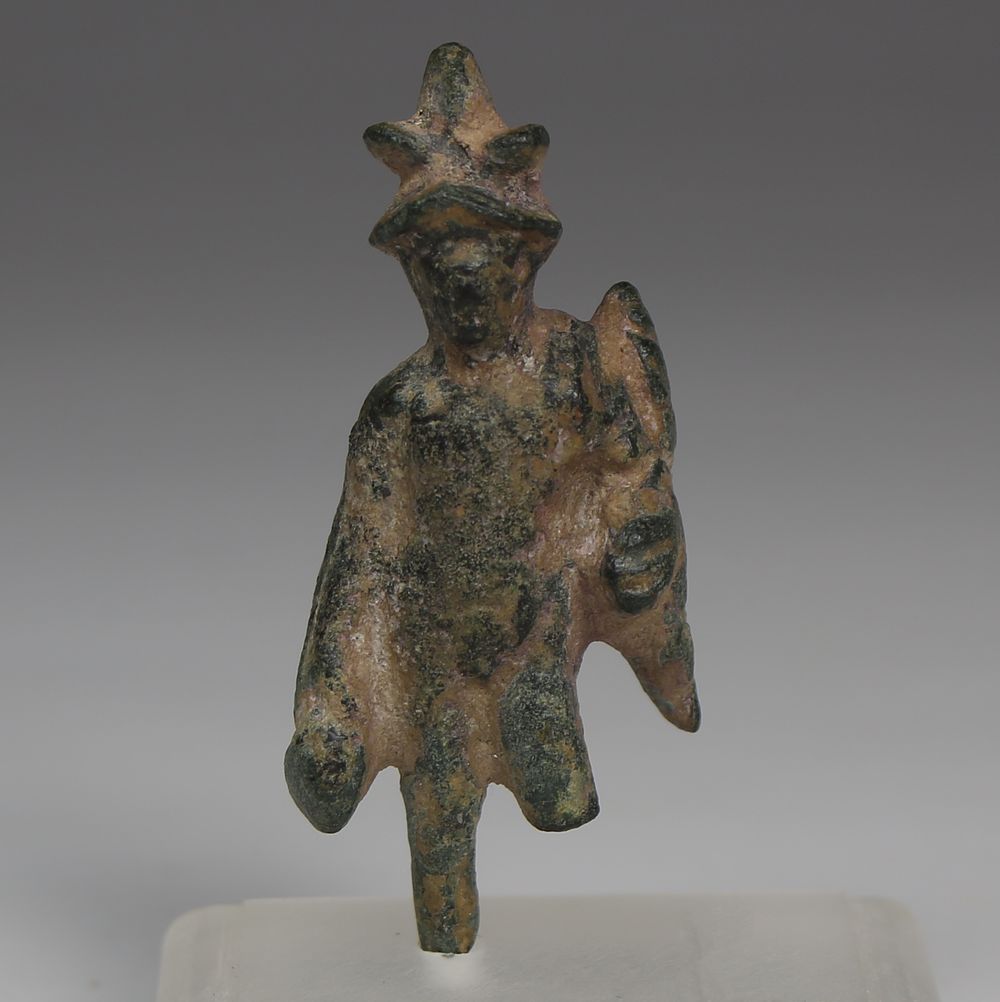
Subasta Bidspirit | Roman statuette of Mercury
Roman statuette of Mercury - ITEM: Statuette of Mercury MATERIAL: Bronze CULTURE: Roman PERIOD: 1st - 2nd Century A.D DIMENSIONS: 48 mm x 23 mm CONDITION: Good condition PROVENANCE: Ex Spanish private collection, bought in English auction house. Ex private collection formed between 1965 - 1975 Comes with Certificate of Authenticity and Export Licence. If you are from outside the European Union, we will have to apply for the export licence again for your country, this takes 3 to 5 weeks and has a cost of 5% of the hammer price, this amount will be added to the final invoice. IMPORTANT: Stand not included Roman Mercury statuettes were small representations of Mercury, the Roman god of commerce, communication, travelers, and thieves, who was equivalent to the Greek god Hermes. Mercury was a highly revered deity in Roman religion, symbolizing speed, cunning, and the flow of goods and information. These statuettes, often made of bronze, marble, or terracotta, were common household objects and were used in both personal and public spaces, serving as devotional items in homes, marketplaces, or even travelers’ sanctuaries. Mercury’s winged cap and caduceus, a staff with two snakes intertwined, are often prominent features in these statuettes, symbolizing his role as the messenger of the gods and a guide for souls. The popularity of Mercury in Roman society is reflected in the widespread use of these statuettes, which were not only decorative but also functioned as protective talismans. Romans believed that placing a Mercury statuette in a home or business would bring good fortune in trade, smooth communication, and protection during travel. His association with commerce made him especially popular among merchants, who would often keep small Mercury statuettes in their shops to ensure prosperous transactions. These figurines were also placed in sacred spaces dedicated to Mercury, where travelers and merchants would make offerings for safe journeys and successful endeavors. Roman Mercury statuettes also reveal the syncretism in Roman religion, where Mercury's identity was blended with local deities in the regions that Rome conquered. In the provinces, especially in Gaul and Britain, Mercury was sometimes fused with local gods of travel or trade, making him an adaptable figure across the empire. The craftsmanship of these statuettes varied greatly, from simple, mass-produced terracotta figures to finely detailed bronze statues that were prized possessions of the wealthier classes.