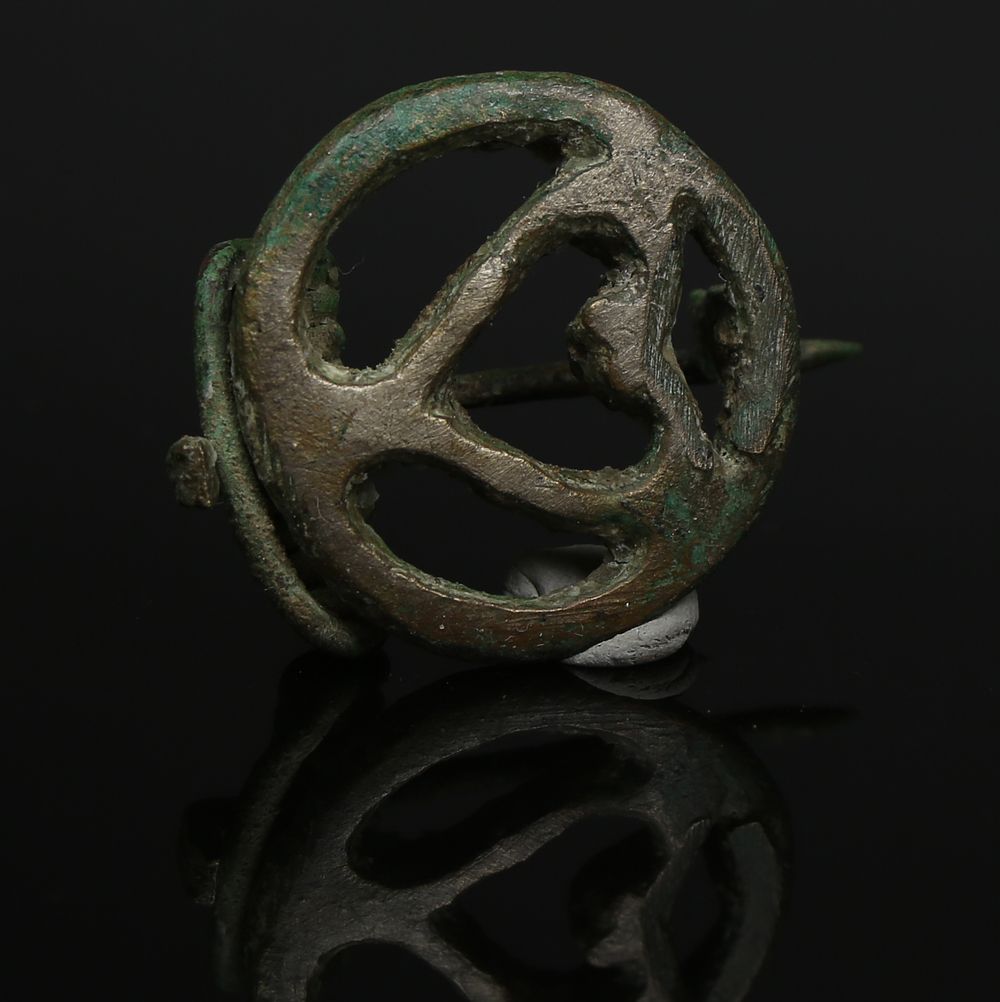
Subasta Bidspirit | Roman openwork fibula
Roman openwork fibula - ITEM: Openwork fibula MATERIAL: Bronze CULTURE: Roman PERIOD: 2nd - 3rd Century A.D DIMENSIONS: 33 mm x 30 mm CONDITION: Good condition PROVENANCE: Ex Spanish private collection, bought in English auction house. Ex English private collection, London, acquired before 2000. Comes with Certificate of Authenticity and Export Licence. If you are from outside the European Union, we will have to apply for the export licence again for your country, this takes 3 to 5 weeks and has a cost of 5% of the hammer price, this amount will be added to the final invoice. Roman openwork fibulas are intricate brooches used primarily to fasten garments, serving both practical and decorative purposes in Roman society. These fibulas, which were the ancient equivalent of modern safety pins, were often designed with openwork patterns, meaning they featured cut-out designs that created a lattice-like appearance. The openwork technique allowed for intricate, lightweight designs that could incorporate complex geometric, floral, or zoomorphic patterns. Made from bronze, silver, or sometimes gold, these fibulas were not only functional items of dress but also highly personal adornments that reflected the wearer's status, taste, and regional influences. The designs of Roman openwork fibulas varied significantly, often depending on the region and the period. Some featured abstract or geometric patterns, while others displayed more elaborate motifs, such as animals, mythological creatures, or symbols with cultural or religious significance. The openwork design allowed artisans to showcase their skill, creating delicate patterns that were both aesthetically pleasing and structurally sound. Fibulas with such intricate designs were often worn by wealthier individuals or members of the military, as they conveyed status and were often used to signify rank or allegiance within the Roman army. Openwork fibulas were not just limited to personal adornment; they also played a role in the cultural and artistic exchanges within the Roman Empire. As Roman territories expanded, fibula designs began to incorporate styles and motifs from the different regions they conquered, blending Roman traditions with local artistry. For example, Celtic, Germanic, and Eastern influences can be seen in the evolving styles of fibulas, making them a rich source of information about the cultural interactions within the empire.