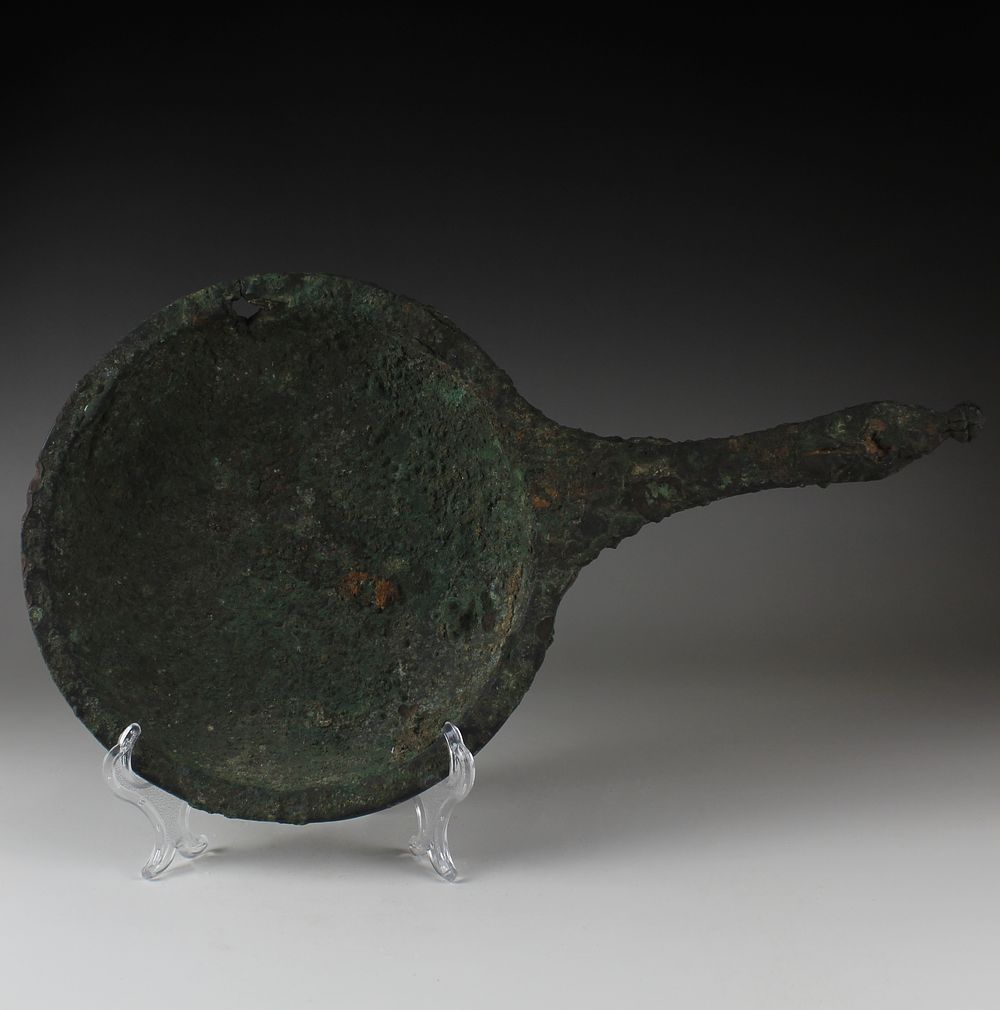
Subasta Bidspirit | Roman patera, Pompeii Type
Roman patera, Pompeii Type - ITEM: Patera, Pompeii Type MATERIAL: Bronze CULTURE: Roman PERIOD: 1st Century B.C - 1st Century A.D DIMENSIONS: 55 mm x 190 mm x 332 mm CONDITION: Good condition PROVENANCE: Ex Emeritus collection (USA), collected from the 1950’s to the 1980’s by a distinguished university professor who served as Department head, Dean and Vice President of a major university. Comes with Certificate of Authenticity and Export Licence. If you are from outside the European Union, we will have to apply for the export licence again for your country, this takes 3 to 5 weeks and has a cost of 5% of the hammer price, this amount will be added to the final invoice. Roman pateras were shallow, circular dishes or bowls with a handle, primarily used for religious and ritualistic purposes in ancient Rome. These vessels were typically crafted from bronze, silver, or ceramic, and their design made them easy to carry and use during sacrificial rituals. The primary function of a patera was to pour liquid offerings, such as wine, milk, or water, to the gods during religious ceremonies. As an essential part of Roman religious practice, pateras were used in both public and private contexts, from large-scale temple rituals to personal household worship. Their simple yet functional design allowed for easy handling during these sacred acts. The decoration of Roman pateras often reflected their religious purpose. Many pateras were adorned with intricate designs, including depictions of gods, goddesses, and mythological scenes, as well as geometric patterns. The presence of such imagery on these vessels not only enhanced their aesthetic value but also emphasized their sacred function. For example, pateras might feature images of deities like Jupiter, Mars, or Bacchus, depending on the specific ritual or offering being performed. The craftsmanship of these objects varied, with more elaborate pateras being used by wealthier individuals or in major temples, while simpler versions were more common in everyday religious practices. Beyond their use in religious ceremonies, pateras also served as symbols of piety and devotion. They were sometimes included in burial offerings or depicted in funerary art to indicate the deceased's religious dedication or role in sacrificial rituals. In Roman military contexts, the patera also held significance as a symbol of the connection between the army and the gods, as soldiers would make offerings before battle or during religious festivals.