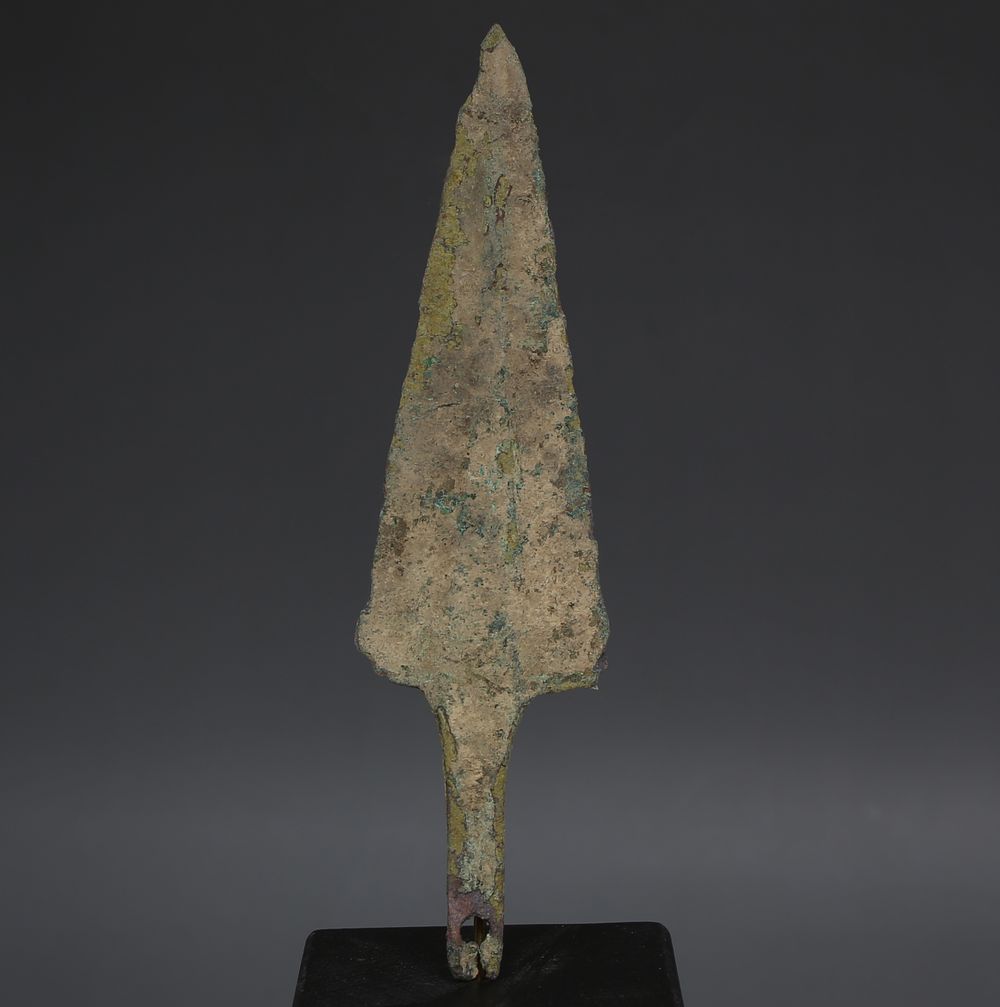
Subasta Bidspirit | Bronze Age spearhead
Bronze Age spearhead - ITEM: Spearhead MATERIAL: Bronze CULTURE: Bronze Age PERIOD: 2nd millenium B.C DIMENSIONS: 150 mm x 40 mm CONDITION: Good condition PROVENANCE: Ex English private collection, acquired before 2000s Comes with Certificate of Authenticity and Export Licence. If you are from outside the European Union, we will have to apply for the export licence again for your country, this takes 3 to 5 weeks and has a cost of 5% of the hammer price, this amount will be added to the final invoice. Bronze Age spearheads are crucial artifacts for understanding the technological and cultural developments of the Bronze Age, which spanned from approximately 3300 to 1200 BCE in Europe and the Near East. These spearheads were typically made from bronze, an alloy of copper and tin, which marked a significant advancement from earlier stone-based tools and weapons. The advent of bronze technology allowed for the production of more durable and effective weapons, including spearheads that were sharper and more resilient than their stone predecessors. The design of these spearheads evolved over time, reflecting changes in military tactics, social structures, and metalworking techniques. The shape and style of Bronze Age spearheads varied depending on their intended use and regional influences. Early examples were often simple and barbed, designed primarily for thrusting or throwing. As metallurgy advanced, more sophisticated forms emerged, including leaf-shaped and socketed spearheads, which provided greater stability and effectiveness in combat. The development of these designs not only improved the functionality of the spearheads but also indicated the increasing complexity of Bronze Age warfare and the professionalization of warrior classes. The variety in spearhead forms across different cultures and regions also reflects the spread of metallurgical knowledge and trade networks during this period. Beyond their practical use in warfare and hunting, Bronze Age spearheads hold significant archaeological and cultural value. They offer insights into the technological advancements of the time, including the processes of casting and alloying metals. Additionally, the presence of spearheads in burial sites often signifies the status and role of the individual interred, as well as the broader social and ceremonial practices of the Bronze Age societies.