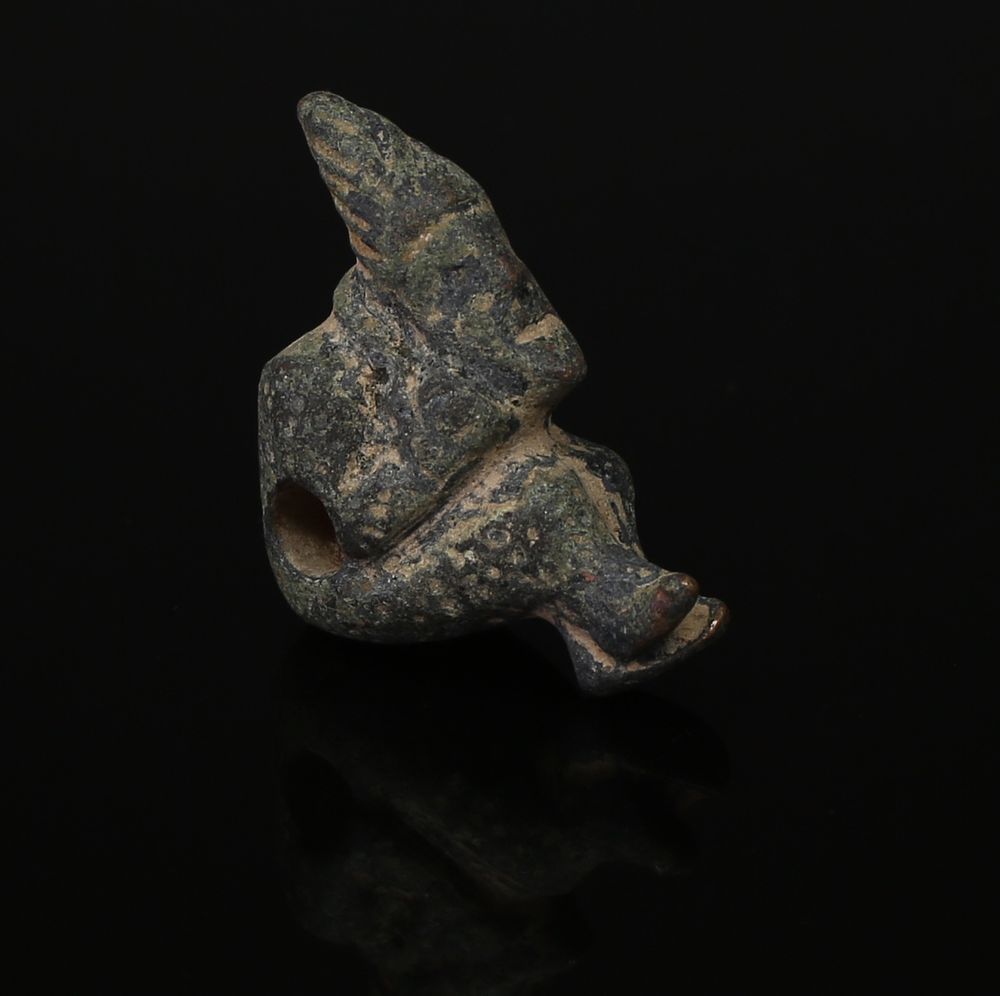
Subasta Bidspirit | Roman statuette of a Germanic
Roman statuette of a Germanic captive - ITEM: Statuette of a Germanic captive MATERIAL: Bronze CULTURE: Roman PERIOD: 2nd - 3rd Century A.D DIMENSIONS: 35 mm x 28 mm CONDITION: Good condition PROVENANCE: Ex Dutch private collection, acquired between 1980 - 1990 Comes with Certificate of Authenticity and Export Licence. If you are from outside the European Union, we will have to apply for the export licence again for your country, this takes 3 to 5 weeks and has a cost of 5% of the hammer price, this amount will be added to the final invoice. The depiction of the Germanic captive in the Roman period provides a glimpse into the complex and often tumultuous relationships between Rome and the various Germanic tribes. Roman art and literature frequently featured Germanic captives, especially in the context of military triumphs and conquests. These depictions served multiple purposes: they were symbols of Roman victory and dominance, and they also functioned as a means of showcasing the power and reach of the Roman Empire. Captives were often displayed in a way that emphasized their role in the Roman military narrative, symbolizing the subjugation of Rome’s enemies and the expansion of its territorial control. One of the most notable examples of this portrayal is found in Roman monumental art, such as the reliefs on the Arch of Titus and the Column of Trajan. These monuments commemorate military victories and often include scenes of captive Germanic warriors in chains or being led in procession through Rome. Such imagery was designed to convey the might of the Roman Empire and to celebrate the emperor’s achievements. The depiction of these captives, typically shown with distinctive Germanic features and attire, underscored the contrast between the ‘civilized’ Romans and their ‘barbarian’ adversaries, reinforcing Roman cultural and ideological superiority. The treatment and portrayal of Germanic captives also reflect broader themes in Roman attitudes toward the Germanic tribes. While captives were often shown in a humiliating or subdued state, Roman authors and officials sometimes depicted them with a degree of respect for their warrior ethos and resistance. This duality illustrates the complexity of Roman interactions with the Germanic tribes—while they were seen as formidable enemies, there was also an acknowledgment of their strength and valor