Subasta Bidspirit | Roman plate with decoration, Ex
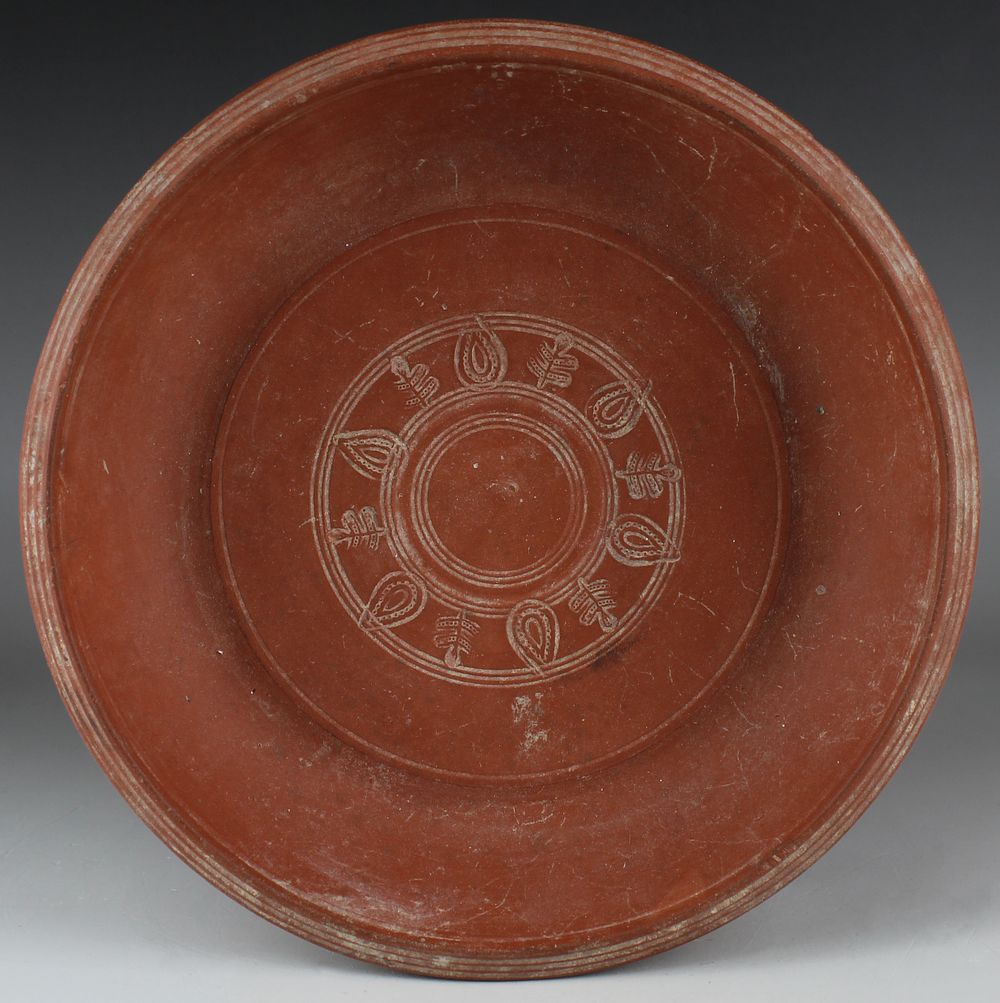
Roman plate with decoration, Ex Marius-Victor-Ernest Dumas collection - ITEM: Plate with decoration MATERIAL: Pottery CULTURE: Roman PERIOD: 4th Century A.D DIMENSIONS: 40 mm x 183 mm CONDITION: Good condition PROVENANCE: Ex Marius-Victor-Ernest Dumas private collection (North Africa and France), acquired in Tunisia between 1890 - 1920. M. Dumas was Controleur Civile (French colonial administrator) of the city of Sousse in Tunisia prior to World War I. This collection of Roman and North African antiquities has remained in the family for the past 100 years in the Haute-Savoie region of France. Comes with Certificate of Authenticity and Export Licence. If you are from outside the European Union, we will have to apply for the export licence again for your country, this takes 3 to 5 weeks and has a cost of 5% of the hammer price, this amount will be added to the final invoice. Roman vessels in North Africa played a crucial role in the region's integration into the broader Roman Empire, facilitating trade, military transport, and cultural exchange across the Mediterranean. North Africa, particularly regions like modern-day Tunisia, Algeria, and Libya, became vital to the empire for its agricultural production, especially grain, olive oil, and wine. Roman vessels, including merchant ships, were essential for transporting these goods from the fertile plains of North Africa to Rome and other parts of the empire. The region's harbors, such as Carthage, Leptis Magna, and Sabratha, became bustling centers of maritime trade, connecting North Africa to Italy, Spain, and the Eastern Mediterranean. The design and technology of Roman vessels used in North Africa reflected the broader Roman advancements in shipbuilding. These ships were often built to be sturdy and capable of handling long voyages across the Mediterranean. They varied in size and purpose, with some designed for large cargo loads, while others were used for military purposes, like protecting coastal regions or transporting soldiers. Roman merchant vessels, typically equipped with a single large sail and several oars, were key to moving bulk goods, such as African grain and oil, which became the lifeblood of Rome, particularly in times of food shortages. The cultural exchange facilitated by these Roman vessels in North Africa was profound. Along with goods, ideas, religions, and art traveled across the sea, leading to the spread of Roman culture and the development of a distinct Romano-African identity. Roman amphorae, ceramics, and other artifacts discovered in North African archaeological sites reveal the extent of this interaction. Roman architecture, language, and customs became deeply rooted in the region, blending with local traditions to create a unique cultural landscape. Roman vessels, therefore, were not just tools of commerce, but vehicles for the transformation of North Africa into a crucial and vibrant part of the Roman world.