Bidspirit auction | MONET CLAUDE: (1840-1926) ´ Poor
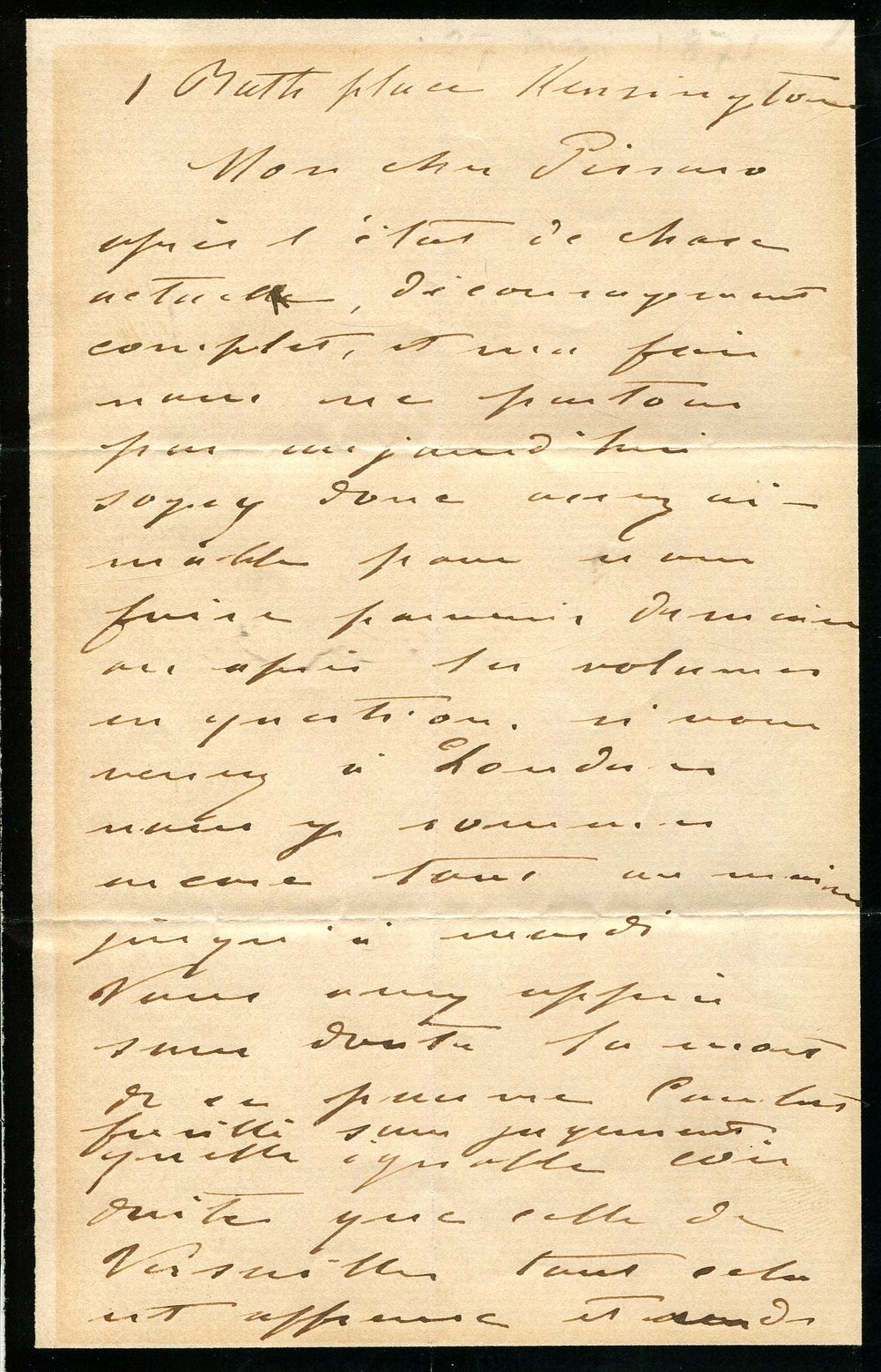
MONET CLAUDE: (1840-1926) ´ Poor Courbet....shot without trial´ – Monet reacts to false news from the Paris Commune - MONET CLAUDE: (1840-1926) French Impressionist painter. A remarkable A.L.S., Claude Monet , two pages (separate leaves), 8vo, Bath Place, Kensington (London), n.d. (27th May 1871), to Camille Pissarro ( ´Mon cher Pissarro´ ), on black bordered mourning stationery, in French. Monet informs his fellow artist ´Après l´état de choses actuel, découragement complet, et, ma foi, nous ne partons pas aujourd´hui´ (Translation: ´Given the current state of affairs, we are feeling thoroughly disheartened, and, truth be told, we are not leaving today´ ), adding ´Soyez donc assez aimable pour nous faire parvenir demain ou après les volumes en question. Si vous venez à Londres, nous y sommes encore tout au moins jusqu´à mardi´ (Translation: ´Please be so kind as to send us the volumes in question tomorrow or the day after. If you come to London, we shall still be here at least until Tuesday´ ) and further remarking ´Vous avez appris sans doute la mort de ce pauvre Courbet fusillé sans jugement. Quelle ignoble conduite que celle de Versailles, tout cela est affreux et rend malade. Je n´ài de coeur à rien. Tout cela est navrant´ (Translation: ´You have no doubt heard of the death of poor Courbet, who was shot without trial. What despicable behaviour on the part of Versailles; it is all appalling and makes one feel sick. I have no heart for anything. It is all heartbreaking´ ). A highly evocative letter, written from Monet's London exile at the bloody culmination of the Paris Commune, vividly conveying his horror at events in France and his genuine belief in the erroneous contemporary reports that Gustave Courbet had been summarily executed by the Versailles forces. Some light age toning to the edges, and a couple of small remnants of former mounting to the upper edges of the verso of each page, evidently indications that the letter was previously framed. About VG Camille Pissarro (1830-1903) French Impressionist painter and one of Monet's closest artistic associates. Like Monet, Pissarro sought refuge in London during the Franco-Prussian War, and the two artists explored the city and its museums together, particularly admiring the landscapes of Turner and Constable. Pissarro later recalled that he and Monet had been deeply impressed by the English painters' treatment of plein-air effects, light and atmosphere. Both artists also encountered the dealer Paul Durand-Ruel in London, beginning relationships which would prove important to their subsequent careers. Gustave Courbet (1819-1877) French painter and a leading figure of the Realist movement. An active supporter of the Paris Commune, Courbet was elected to its governing council and became closely associated with the destruction of the Vendôme Column, symbol of Napoleonic militarism, which was pulled down on 16th May 1871. When government troops entered Paris on 21st May, the resulting Semaine sanglante saw thousands of Communards killed, many by summary execution. Amid the chaos, false reports circulated that Courbet himself had been captured and shot: newspapers of 27th-28th May specifically reported his supposed execution, precisely the misinformation which reached Monet in London and prompted the anguished reaction recorded in the present letter. Courbet had in fact survived, having gone into hiding; he was arrested on 7th June, subsequently sentenced to six months' imprisonment for his involvement in the Commune, and later went into exile in Switzerland. Following the outbreak of the Franco-Prussian War in July 1870, Monet, unwilling to serve in the French army, left France and took refuge in London with his wife Camille Doncieux (1847-1879) and their young son Jean. The family remained there into 1871, their return being further delayed by the violent upheavals of the Paris Commune. The present letter was written on 27th May 1871, during the final days of the Semaine sanglante (‘Bloody Week’), when government forces under the authority of Versailles brutally suppressed the Commune and Paris was engulfed by street fighting, fires and summary executions. Monet's evident distress at events in France—and his immediate acceptance of the false report of Courbet's execution—vividly reflects the confused and alarming news reaching those abroad.