Subasta Bidspirit | [GUERRA PENINSULAR]. INVASÕES FRANCESAS -
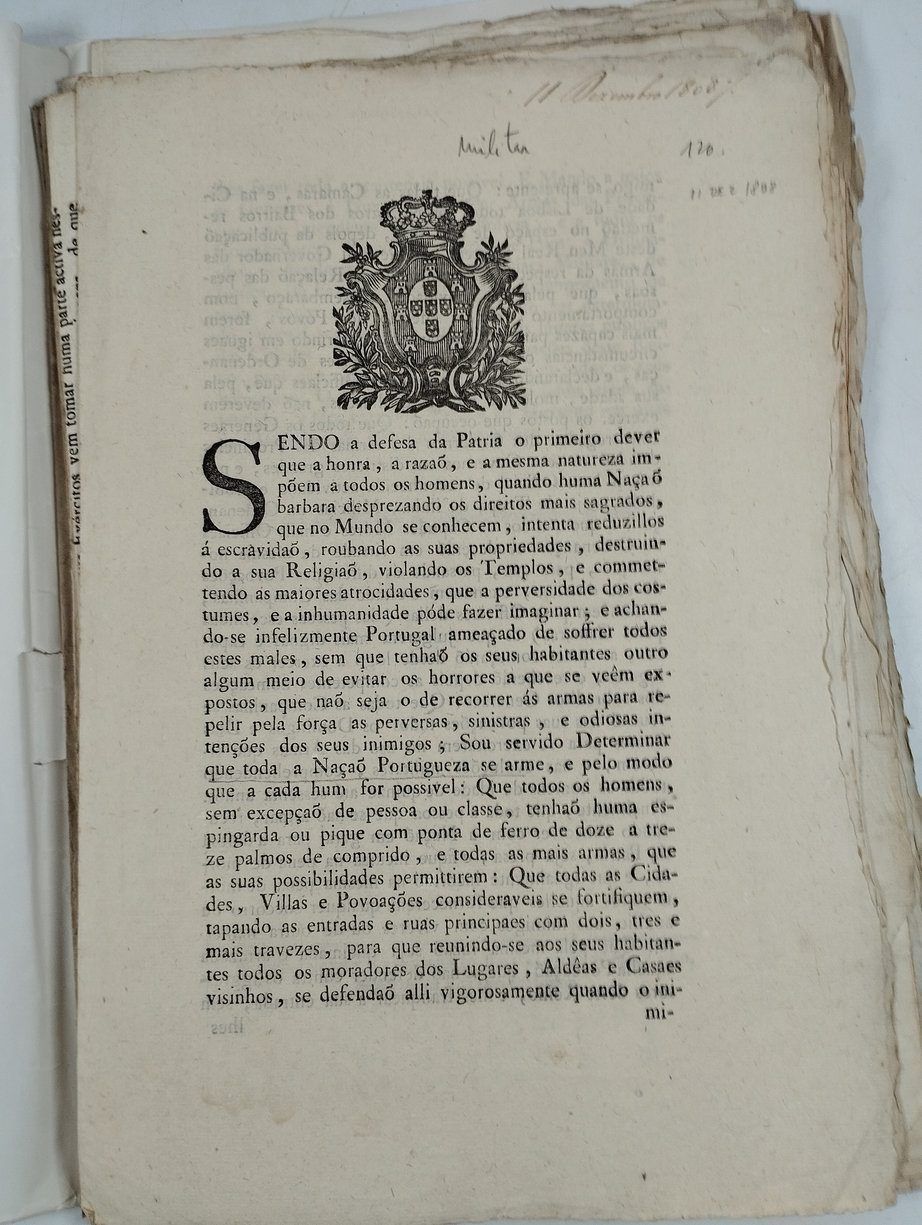
[GUERRA PENINSULAR]. INVASÕES FRANCESAS - Proclamações, Decretos e Editais (1808). Lisboa, Porto, Coimbra e Londres, 1808. - [GUERRA PENINSULAR] INVASÕES FRANCESAS - Proclamações, Decretos e Editais (1808) . 26 documentos: proclamações, decretos, editais, instruções e portaria; Lisboa, Porto, Coimbra e Londres, 1808. A collection of twenty-six documents from 1808, the year of the first invasion and liberation of Lisbon, which brings together the three phases of the year: Junot's decrees as governor of Paris and general-in-chief of the French Army in Portugal, the proclamations of the uprising and the Convention of Sintra, and the legislation of the Government of the Kingdom, the Senate of the Chamber of Lisbon and the Police Intendancy after the withdrawal of the French. Several of the pieces are bilingual, in Portuguese and French or in Portuguese and English. 5 Jan 1808 (Junot, Governor of Paris) - Bilingual decree, Portuguese and French, regulating fishing in Lisbon, ordering the numbering of fishing vessels by district to prevent communication with the English fleet. 1 Feb 1808 (Junot, Governor of Paris) - Bilingual decree ordering that, from that day forward, all public acts, laws, sentences and administrative acts of the Kingdom be made in the name of the Emperor of the French, King of Italy and Protector of the Confederation of the Rhine, after consultation with the Council of Government. February 15, 1808 (Junot, General-in-Chief of the Portuguese Army) - Bilingual decree prohibiting the use of firearms and hunting throughout the territory, due to murders being committed under the pretext of hunting. 27 Feb 1808 (Junot; Francisco António Herman) - Instructions for the execution of the Decree of February 1st on the extraordinary contribution imposed on Portugal, clarifying doubts about the Table of Conscience and Orders and the commendams, the Assembly of Malta, English estates, ecclesiastical benefices and the entry of currency into the Mint. sd (1808) (Bernardim Freire de Andrade) - Proclamation of the Governor of Arms of the Porto District, summoned by the Junta of the Supreme Government of the Kingdom, announcing the march of a body of troops against the enemy and appealing for the cooperation of the people; Porto, Tipografia de António Álvares Ribeiro. August 10, 1808 (Bernardim Freire de Andrade, General Commander of the Portuguese Army) - Bilingual proclamation, Portuguese and French, to the soldiers of the French Army; Headquarters of the Portuguese Army. 11 August 1808 (Bernardim Freire de Andrade) - Proclamation of the general commanding the Portuguese Army to his soldiers, exhorting them to victory, given at the General Headquarters in Coimbra; Royal University Press. August 16, 1808 (Duke of Abrantes, General-in-Chief of the Army of Portugal) - Proclamation to the inhabitants of Lisbon in which the Governor of Lisbon announces that he is separating from them for three or four days; Lisbon General Headquarters; Imperial and Royal Printing Office. September 10, 1808 (British and French Commissioners) - Bilingual proclamation, in English and Portuguese, by the commissioners in charge of executing the Convention, ordering the restitution of property confiscated by the French to the State, royal palaces, public libraries and museums, and private individuals. sd (Sept 1808) (Lieutenant-General John Hope) - Bilingual proclamation, English and Portuguese, to the inhabitants of Lisbon, announcing the liberation of the country, the re-establishment of civil government and the protection of persons and property by the commander of the British troops, prohibiting the carrying of weapons and ordering the closure of taverns between six in the evening and sunrise. September 15, 1808 (Lisbon City Council; Francisco de Mendonça Arrais e Mello) - Edict which, in thanksgiving for the regeneration of the Government and the steadfastness of the Flag, orders three days of illuminations. September 16, 1808 (Lucas de Seabra da Silva, General Superintendent of Police) - Notice to the inhabitants of Lisbon confirming the proclamation of Lieutenant-General Hope and warning against excesses that are confused with public merriment; weapons will be confiscated and taverns must close at six o'clock in the afternoon. September 17, 1808 (Lucas de Seabra da Silva) - Edict against popular disorders and revenge, in which the intendant guarantees police vigilance and immediate punishment, according to military laws, of those found in tumult. September 18, 1808 (Lieutenant-General Sir Hugh Dalrymple, commander of British forces in Portugal) - Bilingual proclamation, English and Portuguese, to the Portuguese nation, calling upon the members of the Regency appointed by the Prince Regent to assume the Government. September 19, 1808 (Lisbon City Council) - Decree ordering a three-day celebration at the Church of the Royal House of Saint Anthony on the 25th, 26th, and 27th,