Subasta Bidspirit | [D. JOSÉ I / D.
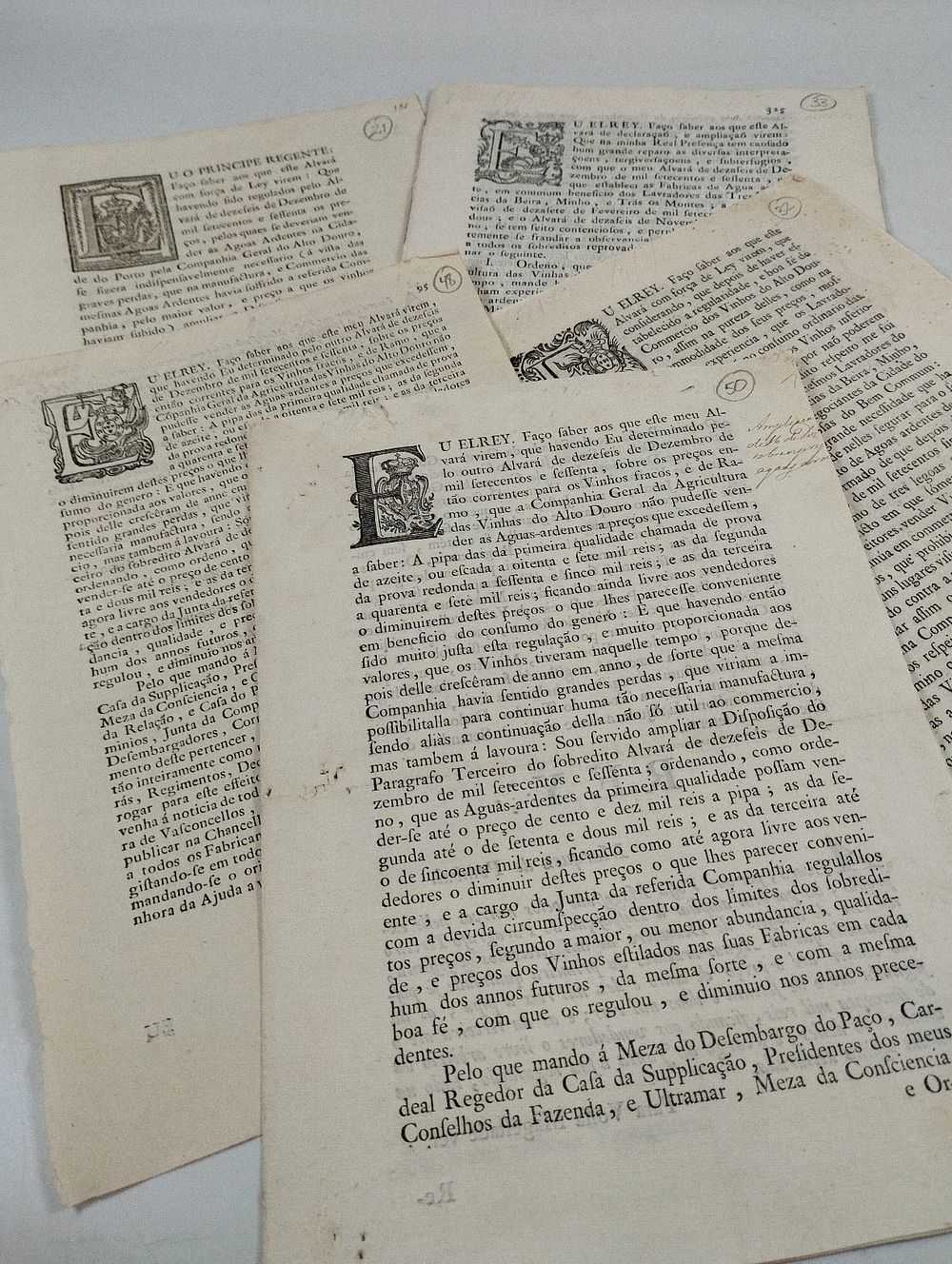
[D. JOSÉ I / D. JOÃO, PRÍNCIPE REGENTE]. COMPANHIA DO ALTO DOURO - Águas Ardentes e Fábricas. - [D. JOSÉ I / D. JOÃO, PRÍNCIPE REGENTE] COMPANHIA DO ALTO DOURO - Águas Ardentes e Fábricas . 5 diplomas: 4 Alvarás, 1 Carta de Lei; Portugal, 1760-c. 1802. A collection of five decrees, four Royal Decrees and one Charter of Law, concerning the distilleries of brandy (aguardente) belonging to the General Company of Agriculture of the Vineyards of the Upper Douro and the regulations governing their price and production, from the law of 1760 until the beginning of the 19th century. 16 December 1760 (D. José I; Count of Oeiras) - Determines that the General Board of Agriculture of the Vineyards of the Upper Douro immediately establish all the necessary distilleries for brandy, not only in the most suitable locations in the Douro, but also in the districts of the lands of Beira, Minho and Trás-os-Montes, expanding paragraphs 10 and 28 of the Institution of the Company; registered on December 22, 1760; printed at the workshop of Miguel Rodrigues. September 26, 1770 (King José I; Marquis of Pombal) - Expands the provision of the third paragraph of the Law of December 16, 1760: first-quality brandy may be sold for up to one hundred and ten thousand réis per pipe, second-quality brandy for up to seventy-two thousand, and third-quality brandy for up to fifty thousand, with the sellers having the discretion to reduce the price and the Board responsible for regulation; registered on October 16 and published on October 18, 1770. Two copies. April 10, 1773 (King José I; Marquis of Pombal) - Declares and expands the Royal Decree of December 16, 1760, which established the factories of brandy for the benefit of the farmers of the Three Provinces of Beira, Minho and Trás-os-Montes, and confiscates the stills of apothecaries who, under the pretext of licenses, claimed exemption from manufacturing brandy; registered on April 16 and published on April 20, 1773. May 25, 1773 (D. José I) - Charter of Law, General Constitution and Perpetual Edict, which, conforming to the opinions of the Royal Court of Appeals, the Holy Office and the Board of Conscience and Orders, restores peace and concord to the Estates of the Kingdom and abolishes the distinction between New Christians and Old Christians (pp. 350-351). c. 1802 (Prince Regent D. João) - Expands the provisions of the Royal Decree of September 26, 1770, which regulated the price of brandy, so that the Company could sell it privately in the city of Porto and places where it sells it, at the prices then regulated for it, taking into account the losses suffered by the Company's factories. The sequence documents the policy of promoting the production and controlling the price of aguardente (a type of brandy), a complementary product to Douro wine, including its relationship with apothecaries and farmers in the northern provinces. ⚑ Auto-translated via Google Translate