Subasta Bidspirit | Solly Malope (b. 1953)
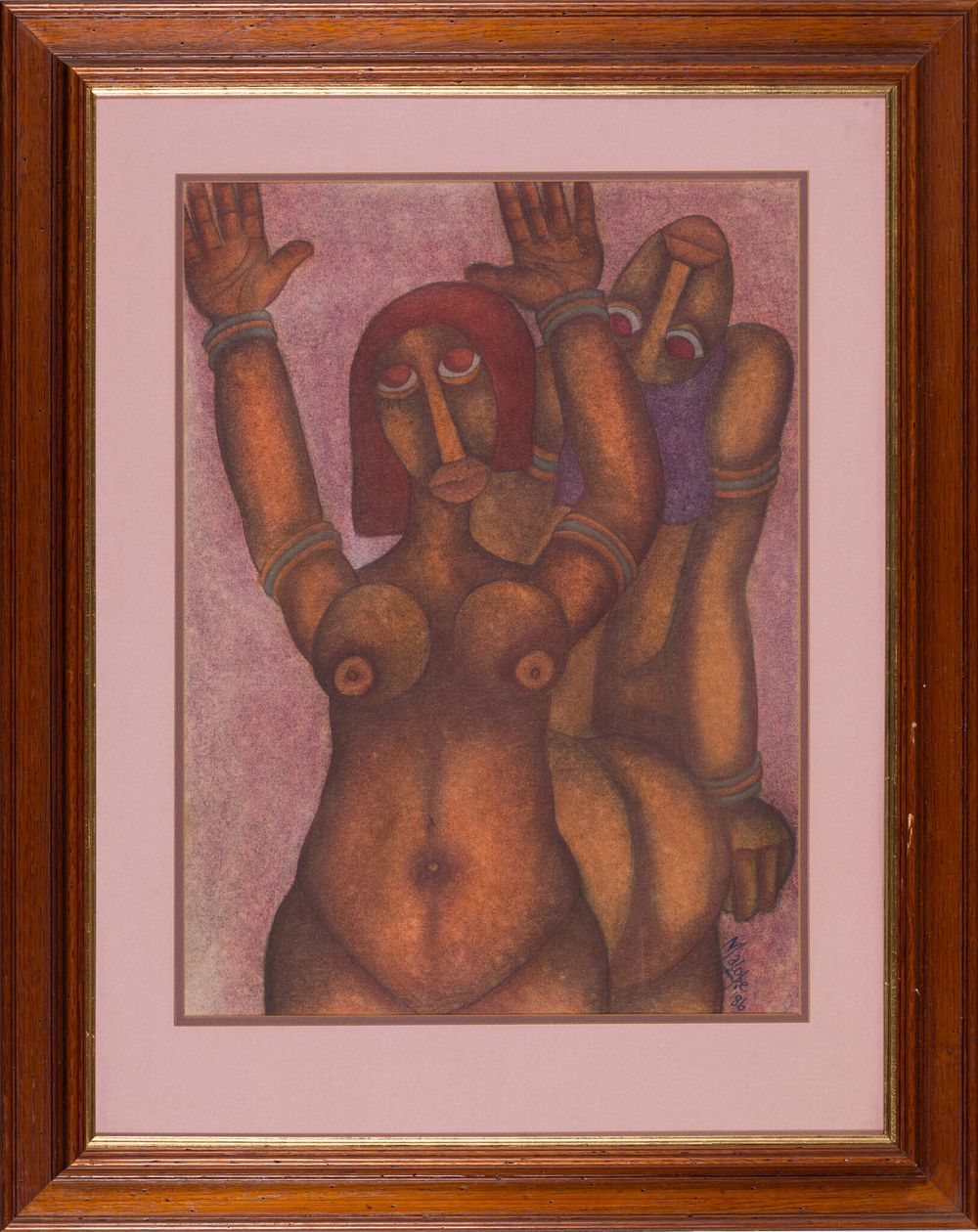
Solly Malope (b. 1953) - Nude Women, 1986. Solly Malope (b. 1953) | South Africa Nude Women , 1986 Pastel on Paper Signed: Signed and dated in black pigment lower right: “S. Malope 86”. May contain original gallery markings or inventory numbers consistent with its acquisition in the early 1990s. Dimensions: Framed: 89 × 71 cm | 35 × 28 in Artwork: 60 × 44 cm | 23.6 × 17.3 in Provenance: Family Collection, Spain: Part of a distinguished private collection of artworks and antiques. Acquired from a gallery or at auction in Cape Town, South Africa, between 1991 and 1995 to furnish a local residence. The collection was subsequently relocated to Spain following the family’s departure from South Africa. Condition: Excellent vintage condition; the work features bold, stable brushwork and a rich, textured surface; professionally framed and glazed. Conditions of Sale: All lots are sold as is. See Section 4 of our Terms and Conditions for return policy. All inquiries must be made prior to bidding, as no further details can be provided after the sale. By placing a bid, you confirm that you have read and agree to our Terms and Conditions in full. Shipping: Aurora & Athena does not provide in-house shipping. The successful buyer arranges shipping directly with a company of their choice. For shipments outside the EU, Spanish export tax may apply to certain higher-value artworks; no export tax applies within the EU. Any such tax is payable by the buyer. Please refer to our Shipping & Export Information page for further details. -- Created in 1986, this expressive work is a quintessential example of Solly Malope’s dynamic approach to the human form. The composition depicts two abstracted female figures, rendered with the bold brushwork and strong linear rhythm that define Malope’s distinctive figurative style. The palette is dominated by earthy ochres and deep brown tones, creating a grounded, primordial atmosphere. Malope’s use of heavy outlines and rhythmic distortion imbues the figures with a sense of movement and monumental presence. This work reflects the socio-aesthetic energy of South African art in the mid-1980s, where figuration often served as a powerful vehicle for exploring identity and the human condition.